☀ WEATHER● RADIOAdvertise
DVDOWNUNDERVOICESAustralia · New Zealand · World
Back to Trade & Logistics
Trade & Logistics

5 November 2026

Carrier emissions intensity varies by up to 35% on major routes

Downunder Voices Newsroom

Source reporting: Container News

Carrier emissions intensity varies by up to 35% on major routes

Container carriers operating on the same trade lane can record emissions-intensity differences of up to 35%, according to VesselBot’ s latest analysis. The report examined 83,817 voyages performed by 6,730 container-carrying vessels during the third quarter of 2026. It assessed sailing patterns, vessel deployment, cargo utilisation and time spent at sea and in port. Across the carriers compared on four major fronthaul routes, the difference between the most and least efficient ranged from 20% to 35%. Meanwhile, fleet-wide average Well-to-Wake emissions intensity remained broadly stable at 235.

About this report

Downunder Voices provides an independently written summary and community perspective based on information published by the original source. The original publisher remains responsible for its reporting.

Join our community

Follow Downunder Voices

Join thousands of readers following news and community stories from Australia, New Zealand and the Pacific.

More from Trade & Logistics

View category
Source: FreightWaves

4 November 2026

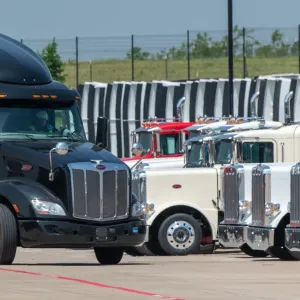
Class 8 truck orders plunge 36% as EPA uncertainty rattles fleets

North American Class 8 truck orders tumbled 36% year over year in October, signaling a surprisingly weak start to the 2027 order season. Trucking fleets are grappling with regulatory uncertainty , rising equipment costs and pressure on operating margins, according to data released Wednesday by FTR Transportation Intelligence. Dan Moyer, FTR’s senior analyst for commercial vehicles, said fleets may be shifting their capital spending priorities toward trailers instead of tractors in the near term. He also noted that higher operating expenses continue to challenge carriers despite improvements in freight pricing. “Also, while freight rates are strong, so are costs for fuel, insurance, and labor, pressuring margins and possibly limiting purchases for now,” Moyer said.

FreightWavesRead original
Source: FreightWaves

4 November 2026

Dry Van & Reefer: Market Signals You Can’t Ignore

Despite trending lower, dry van tender rejection rates still indicate a tight market. Learn why capacity isn’t expanding, even as carriers face cost pressures outpacing revenue growth. We’ll dive into the latest SONAR data, including regional rate maps and intermodal volumes, to uncover the hidden signals in today’s fragile freight market. Dry van tender rejection rates have drifted lower over the past few months but remain around 11%, a level that still signals a tight market, according to FreightWaves analyst Zach Strickland. Despite the slow softening, Strickland cautioned that the market has not meaningfully loosened — carriers and shippers alike should not expect relief soon, particularly with peak season approaching and capacity growth still lagging.

FreightWavesRead original

Read Next

View latest
Source: The Guardian World

5 November 2026

Former police officer Beau Lamarre-Condon enters witness box in Sydney double murder trial

Lamarre-Condon gives evidence in court after pleading not guilty to murdering Jesse Baird and Luke Davies in early 2024 Live updates: Beau Lamarre-Condon gives evidence in murder trial Lamarre-Condon, 31, is accused of fatally shooting couple Jesse Baird and Luke Davies with his police service weapon in Baird’s Paddington home on 19 February 2024.

The Guardian WorldRead original