☀ WEATHER● RADIOAdvertise
DVDOWNUNDERVOICESAustralia · New Zealand · World
Back to World
World

30 October 2026

Arsenal boss Arteta fires ‘Disneyland’ warning at Dowman after red card

Downunder Voices Newsroom

Source reporting: Al Jazeera English

Arsenal boss Arteta fires ‘Disneyland’ warning at Dowman after red card

Arsenal manager Mikel Arteta says he blasted Max Dowman for red card in shock cup loss at Fleetwood.

About this report

Downunder Voices provides an independently written summary and community perspective based on information published by the original source. The original publisher remains responsible for its reporting.

Join our community

Follow Downunder Voices

Join thousands of readers following news and community stories from Australia, New Zealand and the Pacific.

More from World

View category

Read Next

View latest
Downunder Voices Original

30 October 2026

Ships, ammonia and the freight future: why SFL’s purchases matter to trade-dependent nations

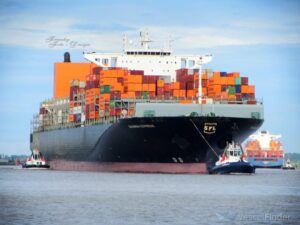
A recent purchase by SFL Corporation — two 8,800 TEU container vessels and a 93,000-cubic-metre dual-fuel Very Large Ammonia Carrier — might sound like an esoteric corporate move. The deal, with deliveries scheduled for 2027 and 2028 and an aggregate price tag of about US$365 million, is more than a balance-sheet item. It is a window into where global shipping is heading and why that direction matters to countries that depend on seaborne trade. Container ships are the arteries of international commerce. The two 8,800 TEU vessels will add capacity when they enter service in 2027, and SFL has secured minimum eight-year time charters for them with a leading liner company, starting on delivery. For exporters and importers, changes in vessel capacity, deployment and charter arrangements influence freight availability and price. While the immediate impacts are shaped by broader market conditions, investments on this scale signal confidence among owners and liners that demand for ocean freight will remain substantial. Equally significant is the acquisition of a dual-fuel ammonia carrier due in 2028. Ammonia as a marine fuel is a nascent but strategically important development as the shipping industry seeks to reduce greenhouse gas emissions. The purchase suggests that shipowners are preparing for fuels beyond conventional bunkers, and that infrastructure, regulatory standards and commercial arrangements will need to catch up. The prospect of very large ammonia carriers entering the fleet raises operational and safety considerations for ports and regulators. Why should Australians and New Zealanders pay attention? Both countries are heavily reliant on shipping for exports and imports. From agricultural commodities to consumer goods, the cost, reliability and decarbonisation of shipping flow through to prices at the supermarket, competitiveness for exporters and the carbon footprint of trade-dependent industries. If the industry is moving towards alternative fuels like ammonia, that transition will require port investments, new safety protocols and clear regulatory frameworks — all of which have cost and timing implications. There are also employment and regional economic implications. Long-term charters can stabilise earnings for shipowners and supply predictability for liner companies, but shifts in vessel types and fuels may change the nature of crewing, maintenance and port services. Governments and industry stakeholders should be preparing now: ports need to assess readiness for ammonia handling, regulators must clarify standards, and training providers should consider the skills that future fleets will demand. SFL’s US$365 million outlay is not just corporate confidence; it is an early signpost of the freight industry’s twin preoccupations — capacity and decarbonisation. For nations whose prosperity rides on the sea, that combination ought to be a national conversation. Planning for new fuels, ensuring resilient shipping capacity and managing the transition in a way that protects trade and jobs are practical policy tasks. Watching the delivery schedules and charter commencements in 2027–28 will tell us much about how quickly that conversation is translating into reality.

Downunder Voices
Downunder Voices Original

30 October 2026

Inflation, infighting and public confidence: the danger of a split between Chalmers and Albanese

Australia’s political leadership is being tested in a bare-knuckled economic moment. On a recent programme, Barrie Cassidy and Tony Barry laid out an unromantic truth: the state of the economy is set to shape how voters view both the prime minister and the treasurer. That matters because the relationship between those two offices is more than political theatre. It is a backbone of national economic management. When it frays, the consequences are practical as well as political. The treasurer, Jim Chalmers, has been explicit about the headwinds ahead. He has signalled that the economy is likely to worsen, with higher unemployment and weaker growth on the way. At the same time, the debate has become noisier and more partisan: Chalmers has sought to pin part of Australia’s accelerating inflation on external factors, including the international political landscape. According to the coverage of the discussion, he attributes some blame to the impact of Donald Trump. That line of argument — pointing to foreign political forces as a driver of domestic pain — will be familiar to voters. Many will see kernels of truth in global causes for local effects. But they are also wary of partisan blame-shifting when the cost-of-living is at stake. Why should ordinary people care? Because inflation, rising unemployment and weaker growth are not abstract metrics; they are the prices we pay, literally and figuratively. They determine whether a household can afford groceries, whether a family can absorb an unexpected medical bill, whether a young person finds work after finishing study. The timbre of political leadership in such times matters. Coherent, credible economic stewardship calms markets, reassures business and helps households plan. Public spats between the prime minister and the treasurer — or the perception that there is disagreement at the top — risk undermining that confidence. There is also a democratic dimension. Cassidy and Barry discussed the broader electoral context: the global spread of contentious politics, and whether figures like Donald Trump — and their associations with hard-right parties overseas — are reshaping politics at home. Meanwhile One Nation has again drawn scrutiny for a political cartoon featuring a children’s television character used as a violent trope. These are reminders that political communication now operates in a noisy, 24/7 environment where imagery and soundbites travel fast and can frustrate sober policy debate. So what should Australians expect from their leaders? First, realism. If the treasurer forecasts tougher months, that should be laid out plainly, with concrete explanations of trade-offs and contingency plans. Second, unity of purpose. The prime minister and treasurer do not have to agree on every tactic, but they must provide a consistent message about objectives: protecting jobs, easing the burden on the most vulnerable, and stabilising inflation. Third, accountability. Voters will want to know what is being done, not just who is to blame. If the relationship between the prime minister and treasurer is as consequential as Cassidy and Barry suggest, repair is not merely a political convenience; it is a public good. Australia is heading into a period that will test both policy and political management. The leaders’ job is to make the economy less frightening for ordinary Australians — to turn complicated forecasts into intelligible choices and to shoulder responsibility rather than point fingers. That is the only way to preserve the trust that households and markets need to weather the next chapter.

Downunder Voices