Advertise with us
DOWNUNDERVOICESAustralia · New Zealand · World
Back to Social Issues
Social Issues

24 August 2026

Why One Nation’s immigration policy numbers are too high - The Nightly

Downunder Voices Newsroom

Why One Nation’s immigration policy numbers are too high - The Nightly

Why One Nation’s immigration policy numbers are too high The Nightly

About this report

This article contains independently written commentary and community perspective from Downunder Voices.

Join our community

Follow Downunder Voices

Join thousands of readers following news and community stories from Australia, New Zealand and the Pacific.

More from Social Issues

View category

24 August 2026

Rent now eats more than half a worker’s pay in every Australian capital — that should alarm all of us

A new Everybody’s Home finding — reported by ABC News — should be a national emergency: renting a unit now costs more than half the median take-home pay of a single worker in every Australian capital city. That reality reframes the housing debate. This is not a problem confined to marginal suburbs or the poorest households. Middle-income workers, young families and essential workers in capital cities are being forced into untenable trade-offs between shelter and other essentials. When housing costs swallow more than half of take-home pay, households lose financial resilience. There is less room for savings, education, healthcare, and unexpected expenses. The social consequences are predictable: crowded or unstable living conditions, delayed family formation, reduced labour mobility, and increased demand for social housing and emergency relief. These are not abstract outcomes — they affect schoolchildren, people with chronic health needs, and workers whose employment depends on being able to live within reach of their jobs. The facts in the report are stark, and they point to a mismatch between supply and demand in urban housing markets. Solutions will not be quick or easy. Higher interest rates, construction costs and regulatory barriers all play a role, but policy responses must prioritise what ordinary households need most: accessible, secure and affordable homes. That means accelerating practical supply measures — including social and affordable housing — while reforming planning and zoning to allow diverse, well-located housing types to be built at scale. There is also a distributional question. Renters have little of the asset-based security many homeowners enjoy, yet they bear the brunt of market-driven price rises. Tax and housing settings should be reviewed to ensure incentives do not skew too heavily towards investor ownership at the expense of fair access to shelter. Support for renters — from rental assistance to stronger tenancy protections — needs to be part of any meaningful response. Critics will point to market pressures and warn against heavy-handed interventions that could deter investment. Those arguments matter, but they cannot justify leaving ordinary workers priced out of capital cities. A healthy economy depends on people being able to live where they work. Governments must combine short-term relief with long-term structural change: targeted rental support, rapid delivery of social housing, and reforms to planning that expand supply in the places people want to live. If the report’s finding that median rent consumes more than half a worker’s pay holds across all capitals, it is a wake-up call. Public policy should respond with urgency and a clear focus on fairness and opportunity, or we risk cementing a two-tier urban future where stable housing is available only to those with assets.

Community angle

When median rent takes more than half a single worker’s take-home pay in every capital city, ordinary households face impossible choices between housing, food and healthcare.

Source: https://www.abc.net.au/news/feed/45910/rss.xmlOriginal source

24 August 2026

CFMEU raids expose alarming overlap of union spaces and alleged organised crime

Police raids on the Construction, Forestry, Mining and Energy Union’s Victorian headquarters and five other properties have plunged a powerful labour organisation into the glare of a criminal investigation. Detectives from Taskforce Hawk arrested five men and searched six properties on Monday as part of inquiries into alleged secret commissions, fraud and drug trafficking. The scale and severity of those allegations demand clear answers — not only for union members but for the public whose safety and trust are at stake. Unions are meant to represent workers and negotiate on their behalf. When law enforcement alleges links between union operations and serious criminal activity — from secret commissions to drug trafficking — the immediate victims are the union’s rank-and-file members. They deserve transparency about who is running their organisation and whether their dues and bargaining power are being used for lawful collective action or diverted to criminal ends. The public, too, has a legitimate interest: if organised crime gains footholds inside institutions that touch large infrastructure projects, the consequences reach far beyond the union hall. The facts publicised so far are limited and are properly framed as allegations. Still, the involvement of Taskforce Hawk, multiple arrests and warrants executed at the union’s Victorian headquarters and other properties suggest investigators see more than isolated wrongdoing. Authorities must be allowed to complete their inquiries. At the same time, union leaders must not hide behind institutional rhetoric. They should cooperate fully, waive unnecessary secrecy, and ensure members receive clear, independent information about governance and finances. This episode also raises wider questions about regulatory oversight. How were alleged secret commissions and suspected links to drug trafficking allowed to develop without earlier detection? Regulators, police and union oversight bodies must review whether existing transparency and reporting rules for unions are adequate. Audits of high-risk procurement and contracting arrangements within construction and related sectors should be prioritised, with protections for whistleblowers who might reveal wrongdoing. There are competing cautions to weigh. Unions have been subject to political attacks in the past; heavy-handed or premature public commentary can harm legitimate collective bargaining and the workers who rely on unions for protections. Equally, reflexive defence of organisations accused of serious criminality risks leaving harmful conduct unchallenged. The right line is clear: rigorous, independent investigation coupled with immediate steps to protect members and public interest. If the allegations are confirmed, prosecutions and governance overhauls should follow. If they are not, the union will still need to rebuild public trust. Either outcome requires clearer rules around transparency, stronger anti-corruption checks in industries prone to criminal infiltration, and better protections for ordinary workers caught in the fallout. Communities who rely on honest trade unions for fair wages and safe workplaces should expect nothing less.

Community angle

Workers, union members and taxpayers all have a stake when a major union’s headquarters is searched and arrests are made over alleged secret commissions, fraud and drug trafficking.

Source: The Guardian WorldOriginal source

Read Next

View latest

24 August 2026

OceanX: Seoul beckons; Zim’s $183 (outperformance); trade wars back on

Greetings from Seoul! Reached South Korea finally on Thursday last week after a quick stop in Shanghai to catch up with a colleague and have some local dumplings. Great to be back. My last trip out here was in Jan 2023, when the remnants of the pandemic were still present. Nice to see Seoul fully back… being able to look into people’s beautiful faces instead of facing masks everywhere (the country is a ...

Source: The LoadstarOriginal source

24 August 2026

Air cargo demand dips, as expected, but rates show more resilience

Global airfreight volumes are falling as the market approaches its traditional end-of-summer lull, but rates are proving more resilient as capacity contracts and fuel costs rise. WorldACD data for 10-16 August show global chargeable weight fell 5% week on week, following a 2% decline the previous week. Yet average worldwide pricing was virtually unchanged, at $2. 97/kg, compared with $2. 96/kg in week 32.

Source: The LoadstarOriginal source

24 August 2026

Appeal to president as congestion at Durban box terminal hits crisis point

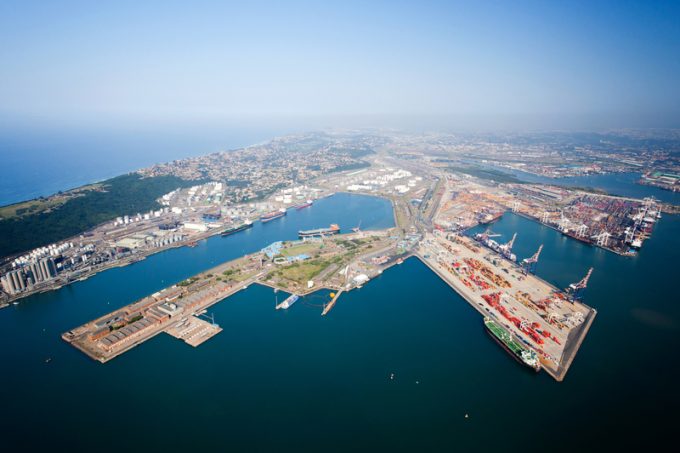
Extreme congestion at South Africa’s Durban Gateway Terminal has got so bad that on Friday, the presidency was called in to help as the port struggles to migrate to a new management system amid equipment breakdowns. And one source told The Loadstar this morning little had changed over the weekend, adding that the port’s operator “hasn’t managed to claw back much of the congestion, stacks are still very elevated”. Carriers are warning ... The post Appeal to president as congestion at Durban box terminal hits crisis point appeared first on The Loadstar .

Source: The LoadstarOriginal source

24 August 2026

Iran vows to retaliate against countries that cooperate with fresh US sanctions

Test of US rhetoric will rest on whether nations such as India, China and Russia view economic threats as credible Iran has vowed to retaliate against any country that cooperates with the US attempt to impose fresh sanctions against Iran in what the Treasury secretary, Scott Bessent, has billed as “the single greatest financial offensive ever marshalled against an adversary”. In advance of the US announcement, the United Arab Emirates, Iran’s single biggest trading partner in the Middle East, announced it was ending all trade with Iran, a move Tehran believes was coordinated between Washington and Dubai.

Source: The Guardian WorldOriginal source