☀ WEATHER● RADIOAdvertise
DVDOWNUNDERVOICESAustralia · New Zealand · World
Back to Social Issues
Social Issues

1 November 2026

Whose water is it? Fiji's treasure, bottled for the world

By From the Editor — Downunder Voices

Source reporting: Downunder Voices Editorial

Whose water is it? Fiji's treasure, bottled for the world

In a Los Angeles hotel room, a square bottle of Fiji Water sells for several dollars. In a village a few hours' drive from the plant that filled it, families still drink from a well, a river or a rain tank. That contrast is the whole story, and Fiji deserves better than to be the label on someone else's luxury. Fiji Water has made the country's name famous on tables from New York to Dubai. But the people whose land holds that water, and whose future depends on it, have to ask a simple question: whose water is it, and who really benefits? A national treasure under foreign ownership Every bottle comes from a single underground aquifer in the Yaqara Valley, on the northern side of Viti Levu. It is rainwater filtered through volcanic rock over many years, a natural gift of Fijian land. Yet the brand is not Fijian. It is owned by The Wonderful Company, the US conglomerate of billionaires Stewart and Lynda Resnick, who bought it in 2004 for a reported US$50 million. Its headquarters are in Los Angeles, and around 90 per cent of its sales have historically been in the United States. The company holds sole rights to draw from that aquifer, at a time when roughly half of Fijians were reported to lack reliable access to clean water. Even today UNICEF says safe drinking water remains a real gap in rural Fiji, and Fijian newspapers keep reporting villages drinking from dirty wells, rivers and rain tanks. When a foreign company can pipe out pristine water for export while Fijian children drink from a well "teeming with frogs", as one Nadroga villager put it in 2023, something is badly out of balance. What does Fiji get back? For years Fiji Water paid an extraction tax of about one-third of a Fiji cent per litre. On roughly F$150 million of exports a year, that came to around F$500,000 for the government. When Fiji tried to raise its share, the company pushed back hard. In 2008 a proposed 20-cent-per-litre tax led to impounded shipments and an industry shutdown, and the government backed down. In 2010 the government set a 15-cent-per-litre tax, which would have lifted Fiji Water's payment to about F$22.6 million. The company responded by closing its plant and laying off around 400 Fijian workers, then reopened just two days later after the government threatened to give the well to another company. That same year Fiji deported a Fiji Water executive, David Roth, accusing him of interfering in domestic affairs. The government also accused the company of manipulating how the value of its exports was calculated to keep its taxes down, and researchers have noted that both the parent company and its subsidiary were registered in tax havens. The lesson is plain. When a small Pacific nation asks a billion-dollar brand to pay a fairer price for its most precious resource, the answer has been closing the doors and putting Fijian jobs on the line. The real cost to the environment The journey of a Fiji Water bottle tells its own story. Empty plastic bottles have been shipped around 8,000 km from China to Fiji, filled at a plant critics say ran on diesel around the clock, then shipped another 8,700 km or more to buyers in the United States. All of that to move water to countries where clean tap water already flows. The plastic rarely comes home. Much of it ends up in landfill or the ocean, the same ocean that is rising around Fiji and other Pacific islands because of climate change. For a nation on the front line of the climate crisis, being the face of a single-use plastic export is a bitter irony. The company's answer was to call its product "carbon negative". Critics called it greenwashing, because the claim leaned on tree planting and offsets that would not happen for decades. By current reports, that goal will not be met until at least 2037. And questions about the water itself keep coming. In 2024 US authorities recalled nearly two million bottles over manganese and bacteria. In January 2025 an environmental group, The Plastic Coalition, filed a lawsuit claiming the "natural artesian water" marketing is misleading. That case has not been decided, but it adds to the doubts. Credit where it is due To be fair, Fiji Water employs hundreds of Fijians, and its foundation has paid for water filters and supply projects in rural villages. In 2019, for example, it helped bring clean water to Natolevu settlement near Nadarivatu for the first time in 91 years. The share of rural communities without clean water has also fallen over the years. But charity is not the same as a fair deal. Small handouts with the company's name on them cost far less than paying a proper price for the water. Fiji should not have to say thank you for a share of its own resource. What must change Fiji's water belongs first to Fijians and to the generations still to come. We call on the Fijian government and Fiji Water to commit to: 1. A fair price for the water. An extraction royalty set openly and reviewed regularly, so Fiji earns a real share of what its water sells for. 2. Clean water at home first. A share of every litre exported should go straight into piped, safe water for rural villages, until every Fijian has it. 3. Full transparency. Publish how much water is taken from the Yaqara aquifer each year, the aquifer's health, and how much tax is paid in Fiji. 4. Real action on plastic. Recyclable or refillable packaging and honest climate claims, not offsets decades away. 5. A voice for landowners. The iTaukei landowners of Yaqara and nearby communities should have a seat at the table on how their water is used. Fiji gave the world its name on a bottle. The least the world's richest water brand can do is make sure Fijians can drink the same clean water they ship overseas. Downunder Voices welcomes responses from readers and from Fiji Water. Sources: Wikipedia (Fiji Water); Trellis; Circle of Blue; IRC WASH; AP via Manufacturing.net; FBC News (August 2023 and November 2025); Fiji Sun. Photo: Village, Viti Levu, by Michael Coghlan via Wikimedia Commons (CC BY-SA 2.0).

Downunder Voices perspective

Why this matters

Fiji Water has made Fiji famous worldwide, yet many rural Fijians still lack safe drinking water. Fiji deserves a fair price for its water, clean water at home first, and full transparency.

About this report

Downunder Voices provides an independently written summary and community perspective based on information published by the original source. The original publisher remains responsible for its reporting.

Join our community

Follow Downunder Voices

Join thousands of readers following news and community stories from Australia, New Zealand and the Pacific.

More from Social Issues

View category
Downunder Voices Original

1 November 2026

Temporary stands, permanent questions: who guarantees safety at mass events?

At least three people were injured when temporary seating collapsed during the early stages of a sold-out Red Hot Summer show on the Gold Coast. The collapse of temporary grandstand seating at a popular event is a jarring reminder that the spectacle of mass entertainment depends on mundane, exacting work behind the scenes: engineering, rigging, inspection and crowd management. Festival and event culture has boomed in Australia in recent years. Those gatherings bring jobs and revenue to local businesses and give communities shared moments of relief and joy. But they also carry risks that are not always visible until something goes wrong. Temporary structures, by definition, are erected, used and dismantled quickly. That convenience can be compatible with safety — when the right standards, skilled contractors and rigorous inspections are in place. Where they are absent, the human cost can be severe. When temporary seating collapses at a sold-out show, the immediate questions are obvious: who designed and assembled the structure, who certified it for use, and what inspections took place before the gates opened? Beyond that, we must ask whether oversight systems are fit for purpose. Local organisers, promoters and councils all play roles in permitting and approving large events. So do the engineers and riggers who are contracted to build temporary infrastructure. But the chain of responsibility must be clear and enforceable. Too often it is diffuse — a tangle of subcontractors and competing incentives. For ordinary attendees, safety should not require specialised knowledge. Ticket-holders want to enjoy music, not worry about whether the seating will hold. That expectation is reasonable. Regulators and event operators must make it reality: by ensuring that temporary structures meet clear industry standards; by requiring evidence of compliance before an event begins; and by maintaining the capacity to inspect and, if necessary, halt a setup that does not meet those standards. There are practical measures that would reduce risk without killing the live-music economy. Mandatory pre-event structural inspections by accredited engineers, certification tracing back to builders and riggers, and clear lines of accountability for promoters are sensible starts. So too is training for event staff on evacuation and emergency response specific to temporary structures. Importantly, organisers should be transparent with the public about safety measures — the knowledge that a rig has been inspected and certified is a small but meaningful reassurance to worried patrons. Incidents like this also underscore the need for a culture that treats safety as integral to success, not an avoidable cost. Promoters and venue operators who prioritise speed or savings over structural soundness are gambling with people’s bodies and livelihoods. If corners are cut, the fallout is immediate and long-lasting: injuries, loss of trust, and regulatory scrutiny that can close down future events. The injured deserve swift medical care and a full investigation. The industry deserves clarity. And the public deserves the confidence to enjoy mass events without fearing for their safety. If the Gold Coast collapse is to have a silver lining, let it be a renewed commitment across organisers, inspectors and regulators to ensure that the things that hold us up — quite literally — do so reliably.

Downunder Voices
Downunder Voices Original

1 November 2026

When social media sins sink campaigns: the Collins fallout and what parties must own

Four weeks out from a state election, One Nation’s Melbourne candidate Matthew Collins quit and apologised after offensive comments on his social media accounts came to light. That sequence of events — offensive posts, public discovery, a hurried apology, resignation — has become depressingly familiar in modern politics. For voters it is more than theatre: it is a test of how seriously parties treat the people they ask the public to trust. Political campaigns are high-pressure environments where parties scramble to put forward candidates who can win. In that scramble, the robustness of candidate selection and vetting processes is often the first cost-cutting casualty. The result is predictable: people who have said or shared things that are unacceptable by today’s standards make it onto ballots, sometimes well into a campaign. When offensive material surfaces, the damage is triple. The individual is exposed and, rightly, held to account. The party faces a reputational hit. And voters are reminded that the choices on offer may not have been properly scrutinised. The timing here matters. With just a month to go, any resignation is disruptive: it saps campaign energy, forces rapid tactical adjustments and distracts from policy debate. It also raises questions about who on the ground will be assembling volunteers, meeting residents and explaining how the party’s platform affects everyday costs and services. For ordinary voters trying to decide between competing visions for their state, such distractions sap the oxygen from issues that actually matter. Parties must take responsibility. An apology from a candidate is the bare minimum. Parties should also be transparent about the checks they perform before endorsing someone. That need not be a theatrical, invasive process, but there should be consistent standards applied across the board — not ad hoc reviews that fall apart when a seat looks winnable. Political organisations that claim to offer better standards of public life should not treat candidate selection as a side task. There is also a broader civic lesson. Social media has a long memory and a habit of resurfacing remarks made in different contexts and at different times. Aspiring public representatives ought to understand that their online footprint is now part of their public record. Voters, meanwhile, should expect parties to look for it during preselection, and to be candid when things slip through. Finally, this episode is a reminder to voters about the limits of apologies. Saying sorry is important when it is sincere and accompanied by action. But it does not negate prior behaviour or its impact. Parties need to show that an apology is followed by meaningful accountability and that their endorsement processes do not leave such risks to chance. Political life should be open and robust, not a conveyor belt of surprises. Parties that want to be taken seriously need to be rigorous about who carries their colours into a contest. Voters deserve the reassurance that candidates have been chosen for reasons beyond short-term electoral arithmetic — that they reflect standards the public can respect. The Collins resignation should prompt not just commentary but a clear commitment from parties to lift their vetting and take ownership of the people they put forward.

Downunder Voices

Read Next

View latest
Source: Deutsche Welle English

1 November 2026

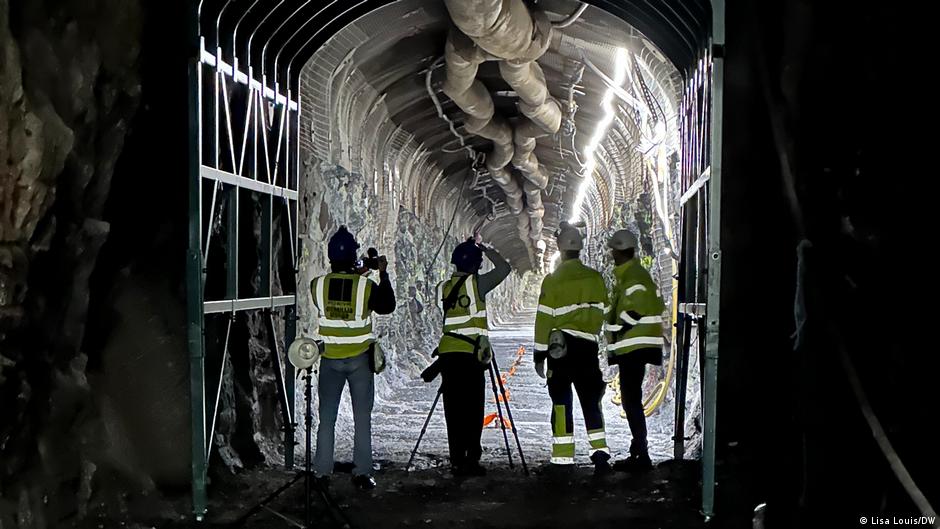
Germany's search for a nuclear waste site

Finland has become the first country with a final storage facility for nuclear waste. Germany is still searching for a site, while some countries have yet to start. Costs are expected to total many billions of euros.

Deutsche Welle EnglishRead original