● RADIOAdvertise with us
DOWNUNDERVOICESAustralia · New Zealand · World
Back to Sports
Sports

12 September 2026

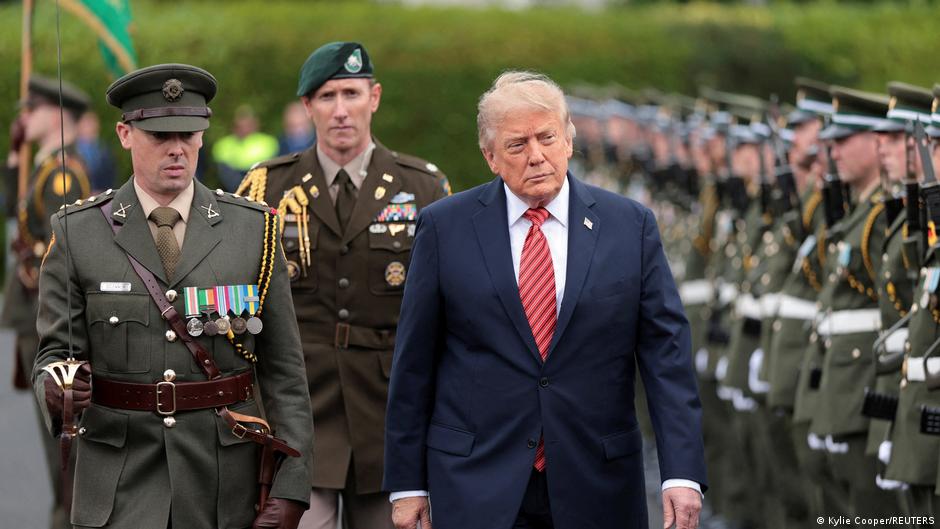
Trump visits Ireland, says unification would be 'fantastic'

Downunder Voices Newsroom

Source reporting: Deutsche Welle English

Trump visits Ireland, says unification would be 'fantastic'

US President Donald Trump's trip to Ireland to watch a golf tournament has also included meetings with leaders there.

About this report

Downunder Voices provides an independently written summary and community perspective based on information published by the original source. The original publisher remains responsible for its reporting.

Join our community

Follow Downunder Voices

Join thousands of readers following news and community stories from Australia, New Zealand and the Pacific.

More from Sports

View category

Read Next

View latest

12 September 2026

When phones fail, the state must answer for public safety

A recent Optus network outage that left callers across three states unable to reach emergency services and prompted dozens of welfare checks by Victoria Police should be a wake-up call for government, industry and regulators. Victoria’s health minister described the disruption as “incredibly disappointing and unacceptable”. Optus has apologised for the outage, but an apology should not be the end of the story. Ordinary Australians depend on reliable communication for work, family and safety; when a major carrier’s fault interrupts emergency access the consequences are immediate and feared. Outages happen in complex networks, but the essential nature of telephone and internet services elevates them beyond mere inconvenience. For many people — the elderly, those with chronic health needs, isolated regional residents and people coordinating care for vulnerable relatives — a phone connection can be the difference between timely help and harm. The reports that operators were unable to route emergency calls and that police were forced into dozens of manual welfare checks underline how human services are expected to plug gaps when commercial systems fail. An apology and a promise to investigate are not enough. Regulators and governments must set clearer expectations for resilience and redundancy, and enforce them. Providers of critical communications services should be required to demonstrate robust contingency plans, routine independent testing of emergency-call routing, and failover arrangements that work in practice across states and territories. Where those arrangements rely on third parties, contracts must be stress-tested and publicly accountable. Service-level commitments need teeth: transparency about outages, mandatory incident reporting, timely public updates and penalties — not as punitive gestures but as instruments to drive change — should form part of the civic deal for companies that run essential infrastructure. The public and emergency services also need better fail-safes. Emergency services cannot be put in the position of improvising welfare checks across a state because a private network faltered. Federal and state health and emergency agencies should jointly review protocols for when telecoms fail, including automatic activation of back-up routing and clear lines of responsibility between carriers and first responders. Community awareness campaigns are sensible too: people should know alternative ways to contact help if a primary service fails. There is also a regional equity dimension. Australia’s dispersed population means network problems can have outsized consequences outside metropolitan centres, where local services are already stretched. Ensuring rural and regional communities are not second-class when it comes to communications resilience should be a policy priority. Australians rely on private companies to run vital infrastructure, but the social contract rests with government. When communications fail and emergency responses escalate, taxpayers and voters will rightly expect action — not just explanations. Optus’s apology is a start; the test will be whether regulators and ministers translate public anger into real, enforceable standards that protect people when technology stumbles. If governments do nothing, the next outage will be followed by the same headlines and the same apologies. That is not good enough for public safety.

Community angle

People across cities and regions rely on phones for emergency help; the outage’s effects on callers and dozens of police welfare checks show why stronger resilience and accountability from telcos and regulators matter locally.

Source: https://www.abc.net.au/news/feed/45910/rss.xmlOriginal source