Migration has always been a pragmatic lever for Australia — a way to fill skills shortages, support businesses and grow the economy. Yet it is also an issue that attracts easy rhetoric and quick political gains. That is why recent reminders from across the political spectrum — including South Australian Premier Peter Malinauskas urging both sides not to enter a race to the bottom with One Nation, and opinion voices insisting the correct response to today’s economic pressures is to preserve a strong migration program — should be treated seriously.
The argument in favour of retaining a robust migration program is straightforward and rooted in the nation’s interests. As commentators have noted, the right policy response to present economic challenges and future opportunities is to preserve migration, not retrench from it. For employers and universities, access to skilled migrants helps fill roles that are otherwise scarce. For the public purse, newcomers contribute through taxes, consume local services and, often, start businesses that employ Australians.
That does not mean migration is without strains. Communities need support to integrate new arrivals; housing supply, school places and health services must keep pace with population growth. Sensible policy does not ignore these pressures — it plans for them. But abandoning a well-managed migration program because of short-term political advantage is the worst kind of penny-wise, pound-foolish approach. Populist calls to slash numbers may sound hard-headed, but they risk hollowing out industries and leaving employers scrambling for staff at a time when targeted skills are in demand.
Equally worrying is the prospect of politics forcing policy reversals that don’t match economic realities. If both major parties shift to appease populist impulses, Australia will lose a competitive edge in a world where skilled labour is mobile and nations compete for investment. Migration policy is not merely about numbers on a page; it shapes the character of communities, the capacity of hospitals and schools, and the vibrancy of regional towns that have revitalised through newcomers taking up local jobs and opening businesses.
The public conversation needs honesty. Preserving a strong migration program means admitting there are trade-offs and planning to meet them: more targeted regional settlement to ease metropolitan pressure, investments in infrastructure, and clearer pathways for skills recognition so migrants are not underemployed. These are management choices, not excuses for scaremongering.
Leaders on both sides should resist the temptation to chase easy headlines. Peter Malinauskas’s call for restraint is a timely reminder that principled policy often looks boring on the nightly news, yet it is the foundation of long-term prosperity. Australia’s future depends on getting this right: not by pandering to fear, but by designing migration settings that meet economic needs and support cohesive communities.
Preserving a strong, carefully managed migration program is not a politically risky stance — it is a necessary one for an Australia that wants to remain prosperous and open in a competitive world.
Community angle
Migration affects jobs, services and communities; preserving a managed program helps fill real skill gaps and supports businesses, but must be paired with planning for housing, schools and regional settlement so ordinary Australians see the benefits.
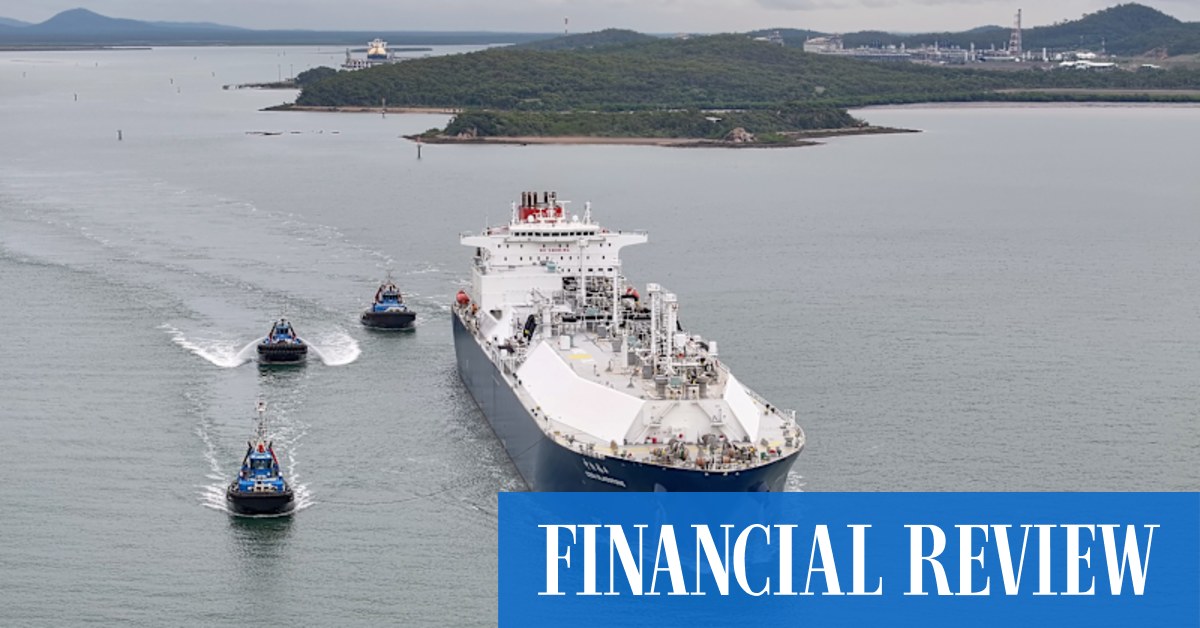
The federal government's renewed push on a national gas reservation is one of those quietly consequential policy choices that will touch household bills, factory floors and the lights in high-rise offices. Energy Minister Chris Bowen has framed the scheme as a guarantee of “modest oversupply” in the domestic market — a purposefully modest phrase, but one that gets to the heart of why a reservation exists: to keep Australian gas available and, by extension, more affordable for consumers and firms.
Reports that Western Australia may escape a watered-down reservation scheme set alarm bells ringing for anyone who remembers how quickly shortages or exports at scale can push up domestic prices. Gas is not just a commodity traded between companies; it is the backbone of manufacturing, a crucial input for electricity generation in some states, and an energy source for thousands of households. When supply tightens because volumes are exported or diverted, ordinary people feel it at the petrol pump and the energy bill. Small businesses — bakeries, laundries, food processors — feel it too, on margins already squeezed by higher wages, rents and shipping costs.
The government is right to promote a policy that creates some oversupply for the domestic market. Put bluntly, a market that treats domestic consumers as an afterthought is not a healthy market. International buyers will always pay a premium; without a reservation mechanism, that premium can pull supply away from local users and drive up local prices. That is not an abstract economic theory but a practical reality for families balancing grocery shops, power bills and childcare costs, and for firms deciding whether the next investment belongs in Australia or overseas.
That said, the design of any reservation must be sensible and adaptable. The phrase “modest oversupply” signals a balance — enough domestic volume to stabilise prices and supply without choking industry or deterring investment in gas projects. But tinkering that waters down the scheme risks satisfying neither objective. If WA or any state is able to slip out of the rules in ways that leave its households or heavy users exposed to international-price pressures, trust in the whole policy will be undermined.
There is another reality that policymakers must keep front of mind: energy markets are changing. Renewables are growing, storage is improving and long-term demand for gas is contested. A reservation scheme cannot be frozen in time; it must be calibrated against changing demand profiles, regional differences in supply and the genuine needs of industry. The federal government should publish clear, transparent criteria for how reservations are set and reviewed — so companies, states and the public can see the trade-offs.
Finally, the prospect of carve-outs or unequal treatment between states jeopardises national cohesion on energy policy. If Western Australia is seen to secure a different deal, other states will push back or seek compensations, complicating an already tricky national transition to lower emissions and more resilient supply. This is not merely about politics; it is about making sure the policy achieves its purpose.
A gas reservation that keeps supply flowing to homes and essential industries, while being flexible enough to adapt to a changing energy system, is a sensible middle ground. The government’s aim of making gas more affordable is one we should all support — provided the instruments used are robust, transparent and apply across the nation, not just in theory but in everyday feeling at household level.
Community angle
Households and small businesses pay the price when gas is exported or diverted; a properly designed national reservation scheme can stabilise energy costs and protect local jobs, but carve-outs or weak rules risk passing higher bills to ordinary Australians.
Mail-in ballots sit in trays before being sorted at the Santa Clara County Registrar of Voters office in San Jose, California, on Oct. 13, 2020. Justin Sullivan/Getty Images Some U. S. Postal Service facilities failed to properly handle ballots during this year’s primary elections, according to a new audit from the agency’s Office of Inspector General.