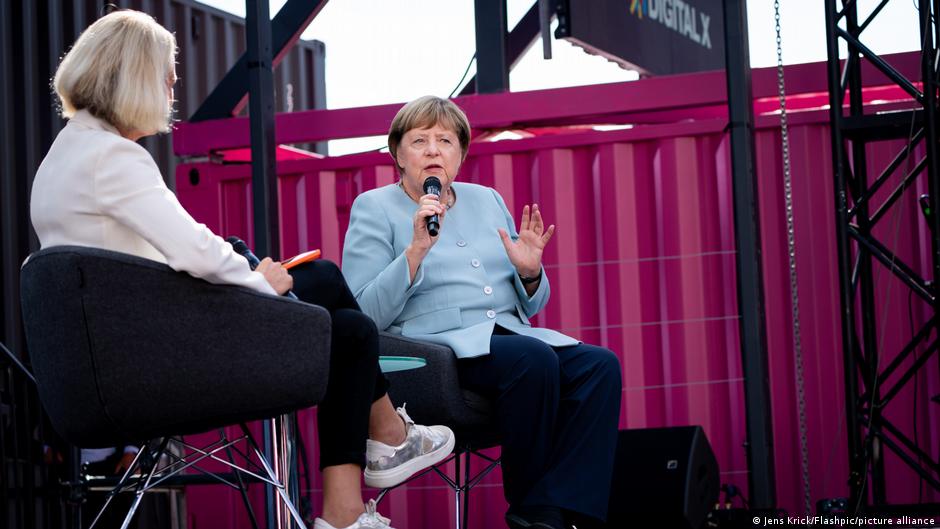
Former Chancellor Angela Merkel called the results in Saxony-Anhalt "simply shocking," and warned of the dangers of feelings trumping facts. The latest PISA education test scores also have Germany reeling. DW has more.
About this report
Downunder Voices provides an independently written summary and community perspective based on information published by the original source. The original publisher remains responsible for its reporting.
Join our community
Follow Downunder Voices
Join thousands of readers following news and community stories from Australia, New Zealand and the Pacific.
A recent multi‑year compute agreement that makes OpenAI an anchor customer of Firmus has pushed the firm’s contracted capacity in Australia past 900 megawatts. That single fact speaks to a broader truth: the rapid roll‑out of large AI systems has tangible consequences for electricity systems, communities and public policy. Australia must reckon with them now, before ad‑hoc capacity builds strain on grids and on public consent.
The technology race is not just about chips and models; it is about real world kilowatts. Making a major AI provider an anchor customer signals long‑term, concentrated demand — power delivered day and night to run servers, cooling systems and supporting infrastructure. Bringing contracted capacity across a firm to more than 900 MW in the region is not a footnote for planners, it is a material change in the scale of industrial electricity demand.
For everyday Australians that matters in practical ways. New large‑scale electricity demand can drive investment in generation, network upgrades and storage — potentially good for jobs and economic activity. But it can also exacerbate supply challenges, push up peak network costs for households and businesses, and complicate emission reduction plans if the additional load is met with fossil‑fuelled generation rather than renewables and storage.
Policy choices will determine the balance. If governments and planners treat this surge as merely a private matter for firms to sort out, there is a risk of hurried infrastructure being built in places least able to resist it, or of growth being fed by high‑emission power. Conversely, a planned approach can steer new investment towards off‑grid renewables, paired storage, or industrial clusters that create local jobs and share benefits with host communities.
The deal underlines the importance of transparent, forward‑looking energy planning. Governments and grid operators need better visibility of long‑term compute contracts so that network upgrades and generation capacity can be coordinated. Communities where large facilities are sited deserve clear information about local impacts and tangible community benefits — from training and jobs to investment in local services.
There is also a role for conditions and standards. Where anchor customers expect long‑term, round‑the‑clock supply, governments should insist on credible pathways to low‑emission power — whether through direct procurement of renewables, long‑duration storage, or verified clean energy imports. Planning and environmental approvals must treat these projects like any other large industrial customer: assess cumulative impacts, test grid resilience and set community expectations.
Australia has been a welcome host for technology investment. But the scale of modern AI compute means that hosting comes with responsibilities. The nation should get ahead of the curve: require better forecasts of large electricity contracts, align new demand with decarbonisation goals and make sure local communities see the benefits. If we fail to do that, we will find our electricity system rearranged not by democratic debate, but by commercial deals done elsewhere — and the consequences for prices, emissions and communities could be profound.
Community angle
As AI companies sign large, multi‑year compute deals, Australians face real impacts on local electricity supply, prices and jobs. The editorial calls for transparent planning, conditions linking new demand to clean power, and community protections so benefits are shared.
Bangladesh cricketer Nahid Rana’s bid to feature in the Big Bash League (BBL) 2026-27 has been dashed even before seeking the BCB’s nod. It is understood that the 23-year-old pacer has garnered ...
Large NZ companies may soon be required to report on modern slavery risks. Nearly 17,000 Australian reports reveal what makes such laws work – and what doesn’t.
The polarizing theme is more critical with McCaffrey. He's a legitimate first-round pick, but he's shown an absurd level of boom and bust throughout his career. Consider his career fantasy scan, using ...
For Garrett, that meant getting some tackling instruction from former Australian rugby coach Billy Coffey. And really, if there is one player who doesn't need to know how to hit any harder, it's ...