● RADIOAdvertise with us
DOWNUNDERVOICESAustralia · New Zealand · World
Back to New Zealand
New Zealand

8 September 2026

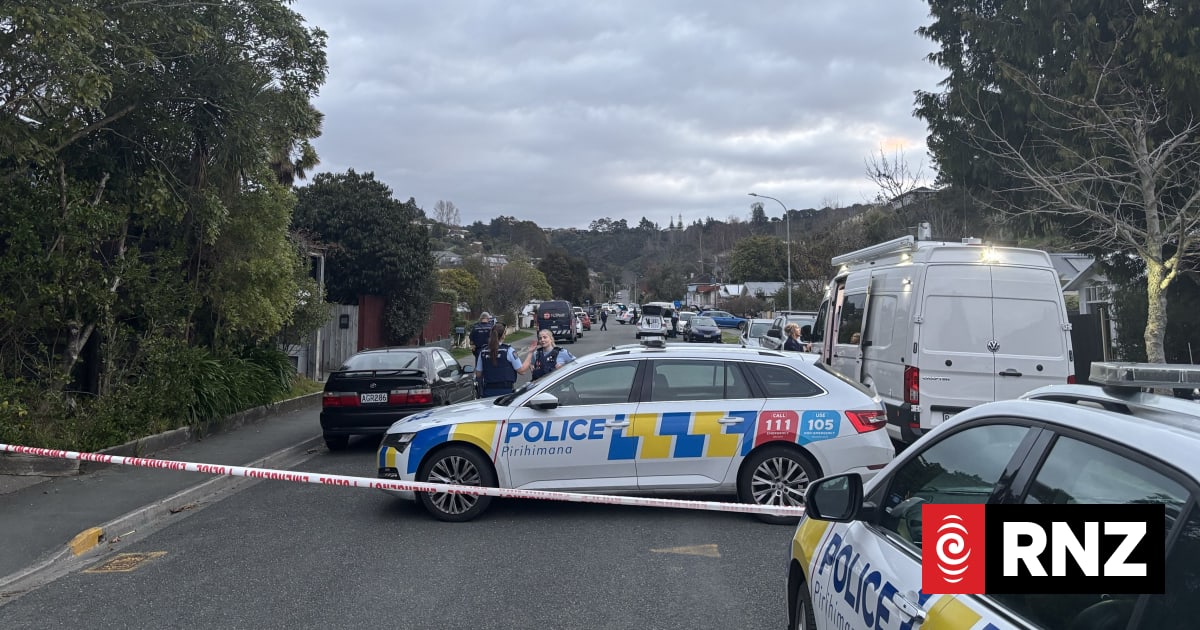
Men charged after hours-long stand-off with armed police in Nelson

Downunder Voices Newsroom

Source reporting: rnz.co.nz

Men charged after hours-long stand-off with armed police in Nelson

One of the men is facing charges of threatening to kill, possessing cannabis and failing to comply with a computer search.

About this report

Downunder Voices provides an independently written summary and community perspective based on information published by the original source. The original publisher remains responsible for its reporting.

Join our community

Follow Downunder Voices

Join thousands of readers following news and community stories from Australia, New Zealand and the Pacific.

More from New Zealand

View category

Read Next

View latest

9 September 2026

Lowering the bar: Tasmania’s revised surgery target risks real harm to patients

A health system’s metrics are supposed to be the levers that keep care timely and safe. In Tasmania, a revised health performance target has changed that relationship: the new target will allow for up to almost one in three elective surgery patients to wait longer than they should for surgery. That is not an abstract readout on a spreadsheet — it is a formula that will leave real people waiting, with all the pain, disability and uncertainty that entails. Elective surgery covers a wide range of procedures. For many people, these operations are the pathway back to work, independence and a life without constant pain. When wait-time targets are relaxed, the effect is twofold. First, patients whose conditions are serious but not immediately life-threatening may endure prolonged suffering. Second, the signal to hospital managers and policymakers is muddied: relaxed targets can normalise delay and reduce the urgency to invest in capacity, process improvements or better triage. The danger of lowering performance bars is not only clinical but political. Targets are a form of accountability: they make it possible for the public to judge how well the health system is serving its citizens. When targets are recalibrated to reflect resource shortages, the public deserves transparency about why that choice was made and how the trade-offs will be managed. Without that, communities are left uneasy that standards are being downgraded rather than resourcing is being fixed. Tasmania’s health system, like others around the country, faces pressures from constrained budgets, workforce shortages and rising demand. But altering targets should not be the default response to those pressures. Instead, the conversation should centre on the steps that will get patients timely care: recruiting and retaining clinicians, expanding surgical lists, improving pre-operative assessment and investing in regional services so patients do not face unnecessary travel. Targets should drive those changes, not become an accommodation for them. There is also an equity dimension to this shift. Waiting longer hits poorest and most vulnerable patients hardest — those who cannot afford private alternatives, who cannot take extended leave from insecure jobs, or who lack family supports to manage prolonged recovery at home. If a third of elective surgery patients are allowed to wait longer, the burden will not fall equally across the community. That is why any change in performance measures needs to be coupled with a clear, time-bound plan to restore and improve services, and with an honest public explanation. The community must be able to see how many people are affected, why the target changed, and what specific investments will be made to reduce waits. Otherwise, the inevitable response will be cynicism: that standards have been lowered to paper over underfunding. Tasmania’s hospitals are staffed by dedicated clinicians and administrators who want to provide timely care. They need the resources and policy settings to do so. Allowing almost one in three elective patients to wait longer is not merely a numerical adjustment — it is a decision about how we value timely access to health. If the public health system is to retain its legitimacy, policymakers must treat targets as a commitment to improvement, not a cushion for decline.

Community angle

Longer elective-surgery waits will affect Tasmanian families directly — delaying operations that restore work and independence, and hitting those who cannot afford private care hardest.
Source: https://www.abc.net.au/news/feed/45910/rss.xmlOriginal source

9 September 2026

Democracy on the line: Australians demand a say over AUKUS, AI and the internet

Australians still say they believe in the ideals of democracy and government. Yet recent reporting paints a worrying picture: that belief is being tested by a growing disconnect between citizens and the institutions that should protect their rights and the integrity of public life. That declining faith in politicians and the political system, the report warns, puts democratic trust at "profound risk". This is not an abstract worry. It feeds directly into how decisions are made about national security, technology and the very sources of information people rely on every day. Consider the new realities we already face. Researchers have identified a "foreign influence" network operating on Facebook that has produced deepfakes of dozens of Australian politicians. Deepfakes are not just a novelty: they can be weaponised to smear candidates, mislead voters and distort public debate. At the same time, Australia is moving to give social media users the option to switch off algorithm-based feeds. That proposal recognises a basic truth: how content is curated matters. Algorithms amplify, prioritise and entrench messages; whether we are exposed to serious policy debate or sensational lies depends in large part on decisions made by platforms tens of thousands of kilometres away. Taken together, these facts underline why Australians are increasingly demanding a greater say over national policy — from AUKUS and defence questions to the rules governing artificial intelligence and online platforms. Citizens do not want to be passive recipients of decisions shaped behind closed doors, nor do they want their democratic discourse hijacked by synthetic images and foreign networks. Trust is eroded when people feel decisions are made without them and when they cannot tell fact from fabrication. Why this matters to ordinary Australians is plain. National security arrangements and major defence partnerships affect taxes, spending and whether young Australians go to war. Rules about AI touch jobs, privacy and safety. The way social media works shapes community relations, political polarisation and even personal mental health. If Australians lose trust in institutions, the consequences ripple into civic life: lower participation, cynicism about public debate and a weakened ability to hold governments to account. Fixing this will not be simple. It requires public institutions to stop treating engagement as an afterthought and to make genuine, sustained investments in transparency and participation. It also demands clear, enforceable rules for tech platforms, so options such as algorithm opt-outs are meaningful in practice rather than cosmetic. Crucially, it calls for stronger safeguards against foreign interference in digital spaces and robust mechanisms to detect and counter manipulated media. None of this undermines the ideals Australians say they still hold dear. On the contrary: the renewed demand for a say signals that citizens want those ideals upheld in the face of new technological and geopolitical pressures. Governments and political leaders should treat that demand not as noise but as a mandate — to rebuild trust by reforming processes, clarifying where power lies and giving people a real stake in shaping the rules that govern modern life. If democracy is to survive these tests, it must be defended not only in the courts and parliaments but in the everyday architecture of the internet, the regulation of new technologies and the openness of decision-making. The report’s warning that trust is at risk should be the spur to action, not an excuse to carry on as before.

Community angle

Ordinary Australians are affected when trust breaks down: it changes public debate, the safety of online spaces and how national security and AI rules are set — all of which shape jobs, privacy and civic life.

Source: https://www.abc.net.au/news/feed/45910/rss.xmlOriginal source