Advertise with us
DOWNUNDERVOICESAustralia · New Zealand · World
Back to New Zealand
New Zealand

20 August 2026

Man charged after hunting incident in Kawau Island, Hauraki Gulf

Downunder Voices Newsroom

Source reporting: rnz.co.nz

Man charged after hunting incident in Kawau Island, Hauraki Gulf

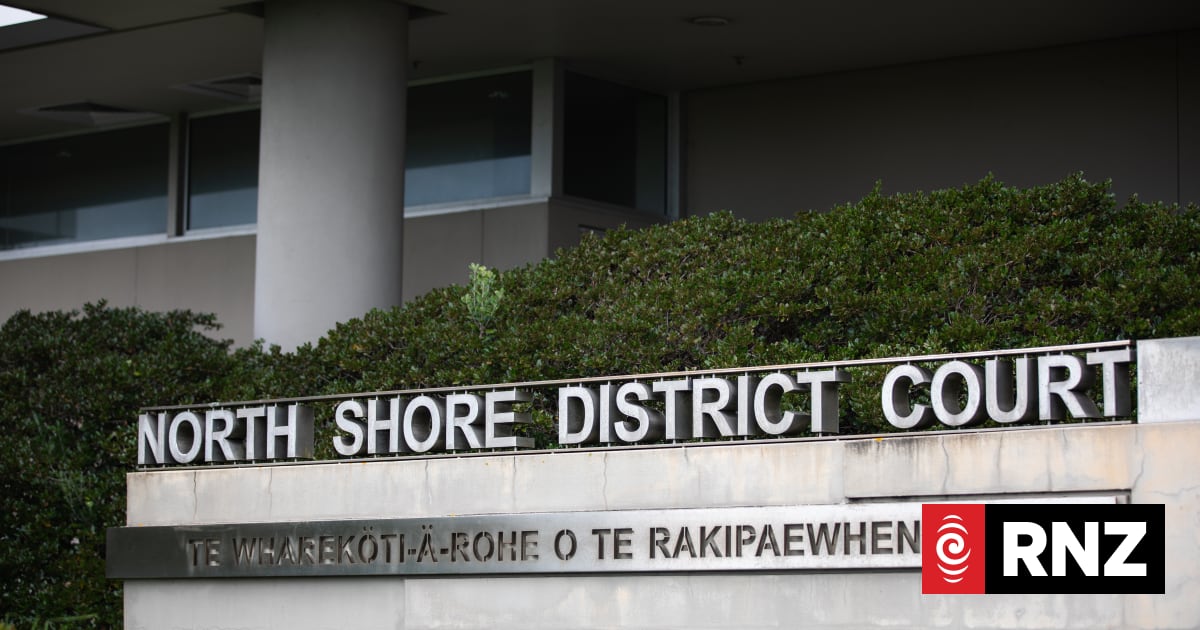
A 44-year-old man has been charged with careless use of a firearm and will appear in North Shore District Court on Friday.

About this report

Downunder Voices provides an independently written summary and community perspective based on information published by the original source. The original publisher remains responsible for its reporting.

Join our community

Follow Downunder Voices

Join thousands of readers following news and community stories from Australia, New Zealand and the Pacific.

More from New Zealand

View category

Read Next

View latest

20 August 2026

Palms and promises: the visa limbo that left a Tongan worker injured and homeless

The story of a Tongan mechanic who arrived in Australia under a Pacific labour scheme, was injured at work, and ended up homeless and trapped in visa limbo after his labour hire firm collapsed is not an isolated anecdote — it’s a warning about where policy and practice are failing migrant workers. The facts are stark: a worker on a Pacific worker scheme suffered a workplace injury, his employer — a labour hire company — collapsed, and the result was homelessness, unemployment and an unresolved immigration status. That sequence exposes several fault-lines. First, the fragility of employment arrangements that tie a worker’s visa and accommodation to a single employer; second, the lack of safety nets for injured temporary workers; and third, the regulatory gaps that allow labour hire operators to collapse without clear contingencies for their employees’ welfare. Australia benefits from Pacific labour schemes. They supply valuable skills to regional firms and provide income opportunities for Pacific families. But that mutual benefit depends on robust protections. A system that leaves injured workers without stable housing, income or certainty about their right to remain in the country is not just inefficient — it is morally unacceptable. It undermines the dignity the scheme is meant to promote and creates exploitable precarity. Policymakers should take several practical steps. First, separate a worker’s visa status from a single employer so that an injured or displaced worker can seek alternative legitimate employment without immediate immigration jeopardy. Second, require labour hire companies operating in these schemes to hold contingency bonds or insurance that ensure continuity of pay, medical care and accommodation if the business fails. Third, strengthen workplace-safety enforcement and rapid-response processes to ensure injured workers are swiftly supported medically and administratively while claims and visa issues are resolved. These measures would impose costs on employers and on government, but those costs must be balanced against the human and public-good costs of homelessness, unpaid medical bills and the social impacts that follow when a vulnerable worker is left adrift. If the schemes are to be defended politically and ethically, they must be redesigned around the premise that temporary status must not equal temporary rights. The Tongan mechanic’s plight should be treated as more than a single misfortune. It is a test of whether Australia can run labour mobility programs that are fair, resilient and humane. Ordinary Australians who care about regional partnerships and basic decency should press their leaders for reform — not platitudes — to ensure the next injured worker is not left to survive on the margins.

Community angle

A Tongan worker on a Pacific labour scheme was injured, became homeless and now faces visa uncertainty after his labour hire company collapsed, highlighting policy and welfare gaps that affect ordinary migrant workers and host communities.

Source: https://www.abc.net.au/news/feed/45910/rss.xmlOriginal source

20 August 2026

Australia deserves answers after IDF clears soldiers over aid worker killing

Australia’s foreign ministry has every right to be angry. When an Australian humanitarian worker was killed in a 2024 triple drone strike on a convoy, the death cut across politics and moved many Australians — it was not an abstract casualty of war, it was someone whose work and sacrifice mattered. That is why this week’s decision by Israel’s military to clear senior soldiers, finding "no reasonable suspicion of criminal misconduct", and the timing of the announcement on World Humanitarian Day feels intolerable to the public and to Zomi Frankcom’s loved ones. The government’s immediate instinct to summon the Israeli ambassador and to consider "next steps" is appropriate. When a national is killed while doing humanitarian work, Australians expect transparency, independent review and accountability. The cleared finding raises at least three pressing questions that Canberra must press hard: what evidence underpinned the IDF’s conclusion; whether Australian investigators were given full access to materials and witnesses relevant to the strike; and whether the legal and procedural standards used to reach the conclusion are consistent with international norms for investigating alleged unlawful harms to civilians and humanitarians. This is not simply a diplomatic spat. It goes to the credibility of institutions charged with protecting civilians in conflict and the mechanisms that states rely on for justice. If foreign militaries can internally conclude their operations were lawful without meaningful external scrutiny, families and the broader Australian public will feel justice is out of reach. That perception, in turn, damages Australia’s ability to advocate credibly for the protection of humanitarian workers worldwide. Australia must calibrate a response that is principled rather than performative. Summoning the ambassador is a necessary opening step. Beyond that, Canberra should be transparent with the Australian public about what information it has sought and obtained; pursue whatever forms of independent inquiry or joint investigative mechanisms are available; and set out clear expectations for cooperation from Israel — including timely access to evidence and witnesses. A private protest is not enough when an Australian’s death is involved. At the same time, the government should be careful not to conflate anger with law. Allegations must be tested against evidence; claims should not be turned into proven facts until properly established. But ordinary Australians will expect their leaders to use every available diplomatic and legal channel to pursue answers and, where appropriate, accountability. Zomi Frankcom’s killing touched people across Australia. The timing of the IDF’s announcement — on World Humanitarian Day — only deepened the sense of hurt and insult. Canberra owes the bereaved and the broader public a clear explanation of what it will do next, and robust action if cooperative answers are not forthcoming. Without that, the country risks sending the message that Australian lives and Australian humanitarians count for less when their deaths occur overseas.

Community angle

An Australian humanitarian was killed in a Gaza convoy strike and the Israeli military’s decision not to pursue criminal charges has prompted the government to summon Israel’s ambassador and consider next steps, raising accountability concerns for ordinary Australians.

Source: The Guardian WorldOriginal source