● RADIOAdvertise with us
DOWNUNDERVOICESAustralia · New Zealand · World
Back to Trade & Logistics
Trade & Logistics

5 September 2026

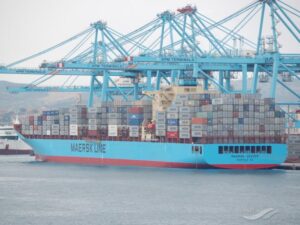
Maersk updates local charges and fuel surcharges across several markets

Downunder Voices Newsroom

Source reporting: Container News

Maersk updates local charges and fuel surcharges across several markets

Maersk has announced a series of pricing updates covering Brazil, Cyprus and North Macedonia , including revised local charges and inland fuel surcharges. The changes take effect between 7 September and 1 October 2026 , depending on the market. Cyprus fuel surcharge set at 12. 5% Maersk will apply a 12. 5% fuel surcharge on truck services in Cyprus from 7 September 2026.

About this report

Downunder Voices provides an independently written summary and community perspective based on information published by the original source. The original publisher remains responsible for its reporting.

Join our community

Follow Downunder Voices

Join thousands of readers following news and community stories from Australia, New Zealand and the Pacific.

More from Trade & Logistics

View category

5 September 2026

DSV expands temperature-controlled air freight network to Shanghai

DSV is expanding its Air ThermoDirect network with a new direct connection between Luxembourg and Shanghai Pudong International Airport (PVG) . The new service strengthens DSV’s temperature-controlled air freight network and targets growing demand from the pharmaceutical sector. The company also plans to add further Air ThermoDirect connections to the United States. Direct freighter flights connect Luxembourg and Shanghai The new connection will operate through multiple departures using dedicated freighter aircraft. According to DSV, this setup gives the company greater control over schedules, routing and cargo handling.

Source: Container NewsOriginal source

5 September 2026

Hapag-Lloyd replaces vessel on MSW service

Hapag-Lloyd has announced a vessel change on its Mediterranean-South America West Coast (MSW) service in September. The CAPE CORFU voyage 637S will phase out at Tanger Med on 16 September 2026 . It will be replaced by PUERTO LIMON EXPRESS voyage 637S . Import cargo to be transferred at Tanger Med Hapag-Lloyd said import cargo aboard CAPE CORFU will be discharged at Tanger Med and reloaded onto PUERTO LIMON EXPRESS. The replacement vessel is scheduled to arrive in Genoa on 14 September and Livorno on 16 September .

Source: Container NewsOriginal source

Read Next

View latest

5 September 2026

Australia’s AI data‑centre boom: the cost of powering our digital future

Australia is in the midst of a fresh technology boom. The rapid build‑out of data centres to meet demand for artificial intelligence and cloud services promises jobs and digital sovereignty, but it is also forcing hard choices about energy, water and local communities. Recent reporting notes that some data centre operators in Australia — as well as in the United States — are now considering gas‑fired power generation to meet their growing energy requirements. That single fact ought to give every community pause. On one level this is a welcome story. Australia has long fretted about being on the back foot in advanced digital infrastructure. More data centres can anchor high‑value jobs, attract investment and keep more of the data that powers AI onshore. For regions outside the capitals, new facilities can deliver a real economic shot in the arm. Governments and planners should want those opportunities. But the rush to build capacity exposes an awkward trade‑off. Data centres are voracious consumers of electricity and, in some cases, water. When grid connections and renewable supplies are limited, the commercial response is predictable: generators and whatever fuel can be procured. The fact that operators are contemplating gas‑fired generation should be understood as a warning sign, not merely a technical detail. Gas generation may be a practical back‑stop for reliability, but it carries consequences. It locks in fossil fuel use at a time when climate commitments — and community expectations — are pushing in the opposite direction. It can also change local air quality and create new industrial footprints in rural areas that thought they were signing up for hi‑tech jobs rather than industrial plant. Meanwhile, heavy water use for cooling will put pressure on local supplies in parts of Australia where water is precious and contested. What ordinary Australians should care about is simple. If planners and investors treat energy and water as afterthoughts, the sector will be propped up by fossil fuel generation and strain public infrastructure. That will invite public resentment, regulatory headaches and political backlash when residents wonder why their power networks are stressed or their water allocations squeezed for private data farms. This does not mean the project should be stopped. Nor does it mean every data centre will be a villain. The right response is to make those trade‑offs explicit and to plan infrastructure accordingly. Federal and state governments need to insist that any new data centre expansion be accompanied by credible plans for clean energy supply — new renewables, storage and firming capacity — and by strict assessments of local water impacts. Where reliance on gas is unavoidable in the short term, operators should be required to demonstrate transition plans and community benefits that meaningfully offset local costs. Industry also has a responsibility. If data centre operators wish to claim the moral and commercial high ground of enabling AI, they must not export their environmental footprint into struggling regional communities. Contracts that bring jobs must also underwrite upgrades to local grids, invest in water efficiency, and contribute to the wider decarbonisation effort. Australians should welcome the digital future, but not at the price of a dirty, divided infrastructure policy. The boom in data centres is a policy moment: get the energy and water settings right now, and Australia can host world‑class AI infrastructure without sacrificing communities or climate commitments. Fail to do so, and the benefits may come with a heavy local bill that voters and councils will rightly resent.

Community angle

Explains why local communities, households and regional economies should care about the environmental and infrastructure trade‑offs behind new AI data centres.

Source: https://www.bing.com/news/search?q=Australia&format=rssOriginal source

5 September 2026

Egyptian TV presenter among 12 sentenced to death for drug crime

Sarah Khalifa, 39, charged with forming organised criminal gang to manufacture and traffick drugs An Egyptian court sentenced a well-known television presenter and 11 others to death for manufacturing and trafficking narcotics in a sprawling drug case, official media reported on Saturday. The presenter, Sarah Khalifa, 39, is best known for her programme Mission Impossible, which dealt with issues concerning security and crime.

Source: The Guardian WorldOriginal source