☀ WEATHER● RADIOAdvertise
DVDOWNUNDERVOICESAustralia · New Zealand · World
Back to Social Issues
Social Issues

2 November 2026

French school protests resume on small scale as students return from break

Downunder Voices Newsroom

Source reporting: Al Jazeera English

French school protests resume on small scale as students return from break

Education ministry says 41 schools blockaded as students return after holiday break.

About this report

Downunder Voices provides an independently written summary and community perspective based on information published by the original source. The original publisher remains responsible for its reporting.

Join our community

Follow Downunder Voices

Join thousands of readers following news and community stories from Australia, New Zealand and the Pacific.


More from Social Issues

View category
Downunder Voices Original

2 November 2026

New Black Sea war‑risk levy shows how geopolitics adds to the household bill

Shipping company CMA CGM’s announcement of a War Risk Surcharge (WRS) for Black Sea trade is a reminder that global geopolitics has a direct cost for Australian and New Zealand businesses and consumers. The carrier will charge US$35 per TEU for cargo to and from Black Sea countries, taking effect on 9 November 2026 generally, but from 1 December 2026 for jurisdictions — including Australia and New Zealand — where regulatory filings delay implementation. The same carrier has also updated a Dangerous Goods Surcharge of US$150 per TEU on selected routes touching Europe, North Africa and the Red Sea. A $35 per TEU levy may sound modest at first glance. But the economics of modern supply chains are cumulative: containers pass through many legs and multiple charges, and higher shipping costs feed straight into the price of imported inputs and consumer goods. For exporters the surcharge increases the effective cost of getting products to market, squeezing margins or forcing higher prices for buyers in overseas markets. For importers, especially small and medium‑sized firms that cannot easily hedge or absorb extra freight expenses, these surcharges eat into already thin margins. Timing matters. The regulatory lag that delays the surcharge to 1 December for Australia and New Zealand means firms may face an abrupt cost rise just as they prepare for the busiest trading period of the year. Businesses that had budgeted around earlier freight estimates will see those budgets upended. Small retailers, manufacturers and regional exporters — the enterprises that keep local economies running and employ many Australians and Kiwis — are the likeliest to feel the squeeze. Beyond the immediate price effects, the new levies underline two broader policy realities. First, shipping costs have become a form of contingent tax on trade, set not by domestic politicians but by carriers responding to risk and regulatory regimes. Second, Australian and New Zealand firms operate in a global market where disruptions — from conflict to piracy and to shifting route economics — can produce rapid and unavoidable cost changes. What should local policy makers and industry do? There is no simple lever to reverse a shipping surcharge imposed because of war risk. But governments can help firms adapt. Practical steps include timely information for exporters and importers about impending fee changes, short‑term support or deferral mechanisms for firms exposed to sudden freight hikes, and work to improve resilience in supply chains — for example by diversifying sourcing, increasing storage capacity where feasible, and supporting logistics competitiveness at Australian and New Zealand ports. Consumers should know why some prices are drifting up as the holiday season approaches. Firms should be candid with customers about freight‑driven cost pressure rather than masking it as general price gouging. And policymakers should treat this as a prompt to accelerate longer‑term work to reduce trade costs and improve supply‑chain resilience. War and maritime risk are not exotic topics confined to foreign policy desks. They affect the cost of the goods we buy, the competitiveness of our exporters, and the viability of firms that provide local jobs. The CMA CGM surcharges are a practical example of how a distant conflict can land on the supermarket shelf and the factory floor in Australia and New Zealand.

Downunder Voices
Downunder Voices Original

2 November 2026

A fifth RBA rate rise will hurt households — governments must act smarter, not louder

The Reserve Bank of Australia is widely expected to deliver a fifth interest‑rate increase, one that will push the cash rate to its highest level since 2008. Bank economists are warning of a “sharper, longer slowdown” for the nation as higher borrowing costs collide with softer house prices and the ripple effects of conflict overseas. For ordinary Australians—mortgage holders, small business owners, and workers—this is not an abstract debate about macro policy. It is a direct hit to household budgets and to the viability of local businesses that employ our neighbours. Central banks raise rates to rein in inflation, and the RBA is clearly fighting an inflation problem that officials judge to be persistent. But the choice facing policymakers is not simply whether to raise rates again; it is how to use the limited policy tools available while protecting the most vulnerable. Higher rates cool demand by making debt servicing more expensive, slowing spending, and ultimately increasing unemployment. Economists’ warnings that the downturn could be deeper and longer are a timely reminder that monetary tightening comes with real economic pain. That is why interventions from political leaders matter — and why some recent interventions risk doing more harm than good. When state leaders publicly warn that another rate rise will force shops to close and cost jobs, they are highlighting a genuine fear. But pointing the finger at the RBA alone misses the point and risks politicising an adjustment that needs careful, coordinated management. Fiscal policy has a role to play; so too does sensible, targeted support for households under the most strain. Governments at both federal and state levels should be looking at the evidence set out in public analysis: blanket spending increases that fuel demand indiscriminately will only add to the RBA’s dilemma. Equally, indiscriminate austerity would deepen the slowdown and push more people into hardship. The right response is more surgical — prioritise assistance for the least well‑off, avoid broad tax cuts that flow largely to higher‑income households, and restrain new spending commitments that would be inflationary without addressing cost‑of‑living pressures directly. For many Australians the concern is immediate: mortgage repayments are rising, shops are quieter, and employers say they cannot afford wages they once paid. That is a recipe for worsening unemployment and social strain. Voters’ anger is already noticeable; politicians should not stoke it by turning macroeconomic reality into a blame game. Instead, they should explain clearly what they are doing to protect jobs and incomes, and how they will help firms adjust to a higher‑rate environment. There are no painless choices. But there are responsible ones. The RBA must pursue its inflation mandate while communicating the likely path clearly. Governments must resist short‑term political reflexes and work together on targeted, evidence‑based measures to shield the vulnerable and help businesses restructure. Ordinary Australians need policymakers to focus on sensible trade‑offs, not grandstanding. The coming months will be difficult — and how leaders manage those difficulties will determine whether the slowdown is merely sharp, or unnecessarily long and damaging.

Downunder Voices

Read Next

View latest
Source: FreightWaves

2 November 2026

Strike at busiest US port just days away as talks continue

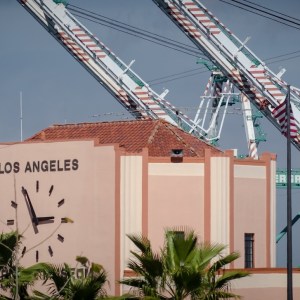
The Pacific Maritime Association and International Longshore and Warehouse Union Local 26 have signed a contract extension through 5 p. m. Pacific Time on Wednesday, Nov. 4, temporarily postponing a potential work stoppage at the ports of Los Angeles and Long Beach while negotiations continue. The two sides will continue bargaining with assistance from the Federal Mediation and Conciliation Service.

FreightWavesRead original
Source: Container News

2 November 2026

ESL expands Far East-Africa network with FAX2 and FAX3 services

Emirates Shipping Line (ESL) will launch two new services connecting major Chinese ports with East and southeastern Africa. The new Far East Africa Express 2 (FAX2) and Far East Africa Express 3 (FAX3) services will complement ESL’s existing Far East Africa Express network. The FAX2 service will connect Qingdao, Ningbo and Nansha with Mombasa through Port Klang. Its first sailing is scheduled to depart Qingdao on 5 December 2026. The FAX2 rotation will be: Qingdao – Ningbo – Nansha – Port Klang – Mombasa – Qingdao FAX3 will provide a direct connection to Maputo, Mozambique.

Container NewsRead original