● RADIOAdvertise with us
DOWNUNDERVOICESAustralia · New Zealand · World
Back to Trade & Logistics
Trade & Logistics

2 September 2026

EuroHoldings extends charters for two feeder containerships

Downunder Voices Newsroom

Source reporting: Container News

EuroHoldings extends charters for two feeder containerships

EuroHoldings has announced time charter extensions for two of its feeder containerships, Joanna and Aegean Express. The 1,732 TEU Joanna secured an extension for at least 30 months, with an additional period of up to 20 days at the charterer’s option. The vessel will earn a gross daily rate of US$24,000 under the new contract, which will commence on 2 December 2026. The 1,439 TEU Aegean Express secured an extension lasting between 24 and 26 months, at the charterer’s option. The new contract will begin on 1 January 2027 at a gross daily rate of US$20,500.

About this report

Downunder Voices provides an independently written summary and community perspective based on information published by the original source. The original publisher remains responsible for its reporting.

Join our community

Follow Downunder Voices

Join thousands of readers following news and community stories from Australia, New Zealand and the Pacific.

More from Trade & Logistics

View category

3 September 2026

FedEx Freight fires chief commercial officer following internal probe

Less-than-truckload carrier FedEx Freight announced Wednesday after the market closed that it has terminated Mike Lyons, its chief specialized services and commercial officer. Lyons was appointed to the role in June 2025, one year ahead of the company’s spinoff from FedEx Corp . “Following an internal investigation, the Company determined Mr. Lyons violated its Code of Conduct and no longer met the standards of employment at FedEx Freight,” a filing with the Securities and Exchange Commission stated. “Mr.

Source: FreightWavesOriginal source

3 September 2026

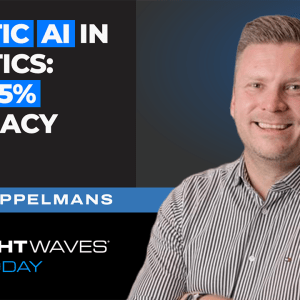
Agentic AI in Logistics: Why 55% Accuracy Fails

Agentic AI in logistics still breaks when spatial reasoning enters the picture. HERE Technologies’ Bart Coppelmans explains why general AI models can understand language but still fail on truck routing, low-clearance bridges, parking, congestion and real-world execution. In this FreightWaves Today segment, Bart lays out why location intelligence has to be built into logistics AI from the start—not bolted on later—and how better spatial grounding can connect planning, execution and driver feedback in real time. #LogisticsAI #SupplyChainTech #TruckingTechnology General-purpose large language models correctly answer only about 55% of basic direction questions, and that accuracy gap is directly blocking the adoption of agentic AI in logistics, according to Bart Coppelmans, head of enterprise product at HERE Technologies. The company, which has powered transport management, fleet management, and last-mile delivery systems for multiple decades, argues that location intelligence must be embedded at the foundation of any AI-driven logistics workflow — not added later.

Source: FreightWavesOriginal source

3 September 2026

200,000 Railcars Face Retirement — What Comes Next?

200,000 railcars could retire over the next few years — and that’s the real railcar market story. TrinityRail CCO Charley Moore joins FreightWaves Today to break down what rising retirements, high lease fleet utilization and delayed build decisions mean for shippers and the broader rail market. The panel also digs into weekly AAR rail traffic, intermodal strength, ag demand, crude shipments and why coal is getting a second look as power demand climbs. If you move freight by rail, lease equipment or watch intermodal capacity, this is the setup to track into 2027. Roughly 200,000 railcars are approaching end-of-life across North America, setting up a significant replacement demand cycle that will pressure an already tight market, according to Charley Moore, chief commercial officer at TrinityRail.

Source: FreightWavesOriginal source

Read Next

View latest

3 September 2026

Sydney’s gangland crossfire: innocent lives keep paying the price

Another life may have been lost to Sydney’s underworld violence, and it is a grim reminder that modern organised crime has grown indifferent to the distinction between rival and random victim. Recent reporting charts a worrying pattern: bungled assassinations and ‘death by association’ incidents are occurring more frequently, and the city may have seen a sixth innocent casualty in the past 18 months. Those words — bungled hit, death by association — describe a chilling reality. Criminal networks no longer fight only in secluded backstreets; their arsenals and methods too often spill into public space. When a targeted attack goes wrong or a bystander is mistaken for a rival, the consequences are immediate and tangible. Families lose loved ones; local businesses and schools feel the ripple effects; neighbourhoods grow wary and fearful. Policing such a threat is complicated. Organised crime is adaptable. It exploits illegal markets — from drugs to gambling and contraband goods — and the money it makes funds weaponry and hired operatives. Recent political discussion has homed in on one of those markets: tobacco. Opposition spokespeople have argued that cheap, illicit cigarettes help finance the organised crime activity behind much of the violence. A public policy pitch has emerged to legalise and regulate vapes, slash tobacco excise and strengthen enforcement to choke off the illicit trade. That argument is important and understandable. Where criminals can extract profit with little risk, their reach expands. Cutting demand for illegal products and tightening enforcement can, in theory, reduce revenue streams that bankroll violence. But the policy debate must be careful and evidence‑based. Lowering excise and legalising new nicotine products may have complex effects on behaviour, market incentives and public health; stronger enforcement requires sustained resources and intelligent disruption of criminal networks, not jumps to simple solutions. Beyond the debate on tobacco lies the immediate need to protect communities. That means targeted policing that focuses on supply chains and not merely on punitive responses after a shooting; it means working with local leaders to reduce the chances bystanders are present where violence erupts; and it means better intelligence-sharing so that police can disrupt plots before they are executed. It also calls for investment in community services that offer alternatives to those drawn into organised crime in the first place. For ordinary Sydney residents the policy choices are practical, not theoretical. Parents expect streets to be safe for children. Commuters expect to catch a train or walk down a footpath without worry. Shopkeepers want trade that is not undermined by the fear of violence. If illicit markets fuel criminal power, tackling those markets makes sense — but so does recognising that suppression of supply without attention to demand, rehabilitation and social services will be incomplete. And there is a wider civic point. When headlines record another innocent killed, public confidence in institutions declines. The community needs to see coordinated action: sensible laws, funded and intelligent enforcement, targeted social programs, and clear communication from authorities about what they are doing and why. Temporary arrests and tough rhetoric will not be enough; what Sydney needs is a durable plan to shrink the space in which organised crime operates and to protect the people who are paying the price.

Community angle

Rising mistaken‑identity shootings have direct local impacts: loss of life, fear in public spaces, and damage to neighbourhood life. Ordinary people need to know how policy choices — from excise settings to enforcement priorities — will affect safety on their streets.

Source: https://www.abc.net.au/news/feed/45910/rss.xmlOriginal source

3 September 2026

When policing meets protest: Sydney needs answers after Eyad Shadid’s civil case

A new civil action in the NSW District Court has put the spotlight back on how police handle volatile public gatherings. Eyad Shadid, a Palestinian Australian, has launched proceedings alleging he was assaulted, battered and falsely imprisoned by officers near Sydney’s Town Hall during a rally in February. The charges that once hung over him were dropped; the complaint now is about what happened to him in the moments when officers were meant to be keeping the peace. The bare facts are straightforward but stark. A man who says he was intervening to help a prayer group at a downtown rally now says he was on the receiving end of force and restraint that amounted to a deprivation of liberty. Those are serious claims against agents of the state and they raise ordinary but urgent questions for Sydney residents: how are protests policed, who checks the force used, and how is public trust maintained when incidents like this occur? Policing public demonstrations tests a liberal democracy’s capacity to balance order with rights. Sydney’s civic life depends on the ability of people to assemble and express views without fear of unjustified interference. At the same time, police must be able to respond to unlawful behaviour and keep bystanders safe. When an episode produces a civil claim alleging battery and false imprisonment, it is a signal that the balance may have tipped, at least in perception, and perceptions matter for legitimacy. That legitimacy is not an abstract commodity. It affects cooperation with investigations, willingness to engage with officers, the reporting of crimes and the smooth functioning of everyday policing. If members of particular communities — including migrants and people from minority backgrounds — come to believe they are more likely to be on the wrong end of force, that is a civic problem as much as a legal one. The dropping of criminal charges against Mr Shadid shifts the dispute from criminal law into civil redress, but it does not close the public conversation. Civil suits can do important work: they demand evidence, produce findings and sometimes prompt reforms. They also highlight practical gaps. Was there adequate video? Were independent witnesses properly identified? Did command-level officers review conduct in real time and after the event? The answers will matter for future operational orders and training. There is also a systems question. How well do existing oversight mechanisms — internal professional standards units, independent oversight bodies and civilian complaint pathways — respond when force is alleged in crowded, tense environments? Quick, transparent processes that communicate clear findings will do more for public confidence than lengthy secrecy or procedural delays. For ordinary Sydneysiders this is not a remote institutional debate. It is about whether people can attend a rally, pray, protest or simply pass through the city centre without fearing avoidable harm. It is about whether the state is willing to be held to account when one of its own is alleged to have crossed the line. Civil litigation should not be the only accountability mechanism, but it plays an essential role in uncovering facts and, sometimes, in driving change. The court will now do its work in public; that is proper and necessary. What should follow — regardless of outcome — is a calm but thorough review by police and oversight bodies of the practices used at that rally and similar events. Sydney needs both the security of well‑resourced policing and the assurance that police power is checked, transparent and fair. Without both, confidence erodes and the city’s civic life suffers.

Community angle

This case touches on everyday freedoms: the right to protest and pray, the accountability of those who police public spaces, and whether people from minority communities can expect fair treatment. The outcome affects trust in local policing, not just the individuals in the courtroom.


Source: The Guardian WorldOriginal source