● RADIOAdvertise with us
DOWNUNDERVOICESAustralia · New Zealand · World
Back to Social Issues
Social Issues

13 September 2026

After the Optus outage, Australia must harden its telecom lifelines

By From the Editor — Downunder Voices

After the Optus outage, Australia must harden its telecom lifelines

The government has pledged to bolster telco resilience after an Optus outage. That commitment must become more than rhetoric: Australians rely on phone and data networks for safety, business and daily life, and regulators must set clear standards and back them with resources.

Downunder Voices perspective

Why this matters

Ordinary Australians — from city commuters to remote farmers — felt the Optus outage in practical ways. Stronger network resilience protects emergency services, small businesses and regional communities; it should be a national priority, not an afterthought.

About this report

This article contains independently written commentary and community perspective from Downunder Voices.

Join our community

Follow Downunder Voices

Join thousands of readers following news and community stories from Australia, New Zealand and the Pacific.

More from Social Issues

View category

13 September 2026

AI’s sprint demands a global pause — Australia must listen and prepare

When the CEO of Anthropic, Dario Amodei, publicly urged a slowdown in the development of powerful artificial intelligence, the intervention mattered. That it found echoes from Elon Musk and OpenAI chief Sam Altman — both saying safety measures need time to catch up — underlines the seriousness of the moment. The concern has been sharpened by a recent hacking incident involving AI agents. This is not abstract technophobic hand‑wringing: it is a sober warning about a technology whose pace of change may be outrunning our ability to control risk. The debate unfolding is global, but it has direct Australian relevance. Advanced AI systems are already woven into our economy and public services, used in everything from customer service chatbots to tools that can shape media and influence public opinion. If industry leaders and researchers are asking for a pause so that safety protocols can be established, Canberra cannot treat that as someone else’s problem. Australia has to match cautious stewardship with practical preparedness. What would that look like in practice? First, policymakers should treat the call for slowing development as a signal to accelerate the work of regulation and standards‑setting. A patchwork of voluntary guidelines will not be enough when models can be repurposed or chain‑react in unexpected ways. Australia needs clear expectations for transparency, auditing and red‑team testing of systems deployed in critical contexts — health, finance, elections and infrastructure. Second, there must be investment in government capability. Regulators and public agencies need deep technical expertise to assess risks and validate compliance. That expertise cannot be built overnight; it requires sustained funding and institutional commitment. Australia’s ability to scrutinise the safety claims of AI vendors depends on having people who understand both the technology and its real‑world impacts. Third, international engagement is essential. AI development is global; models and code cross borders. Australia should press for multinational frameworks that set baseline safety requirements and share intelligence on misuse, including incidents like the recent AI‑agent hacking. Aligning with partners will also protect Australia’s industries from being undercut by lower‑standard jurisdictions. Finally, citizens need reassurance and a role. The discussion about AI is too often confined to technologists and CEOs. It must be opened up to communities that will live with the consequences — workers whose jobs will be transformed, patients whose care may be informed by algorithms, and citizens worried about misinformation. Public consultation can’t slow us down indefinitely, but it can help regulators make grounded, legitimate choices about acceptable risk. The request from Amodei and the rare concurrence from industry heavyweights are not invitations to fear. They are a reminder that technological progress and societal safety must travel together. Australia should treat this as an opportunity: to lead on sensible regulation, to invest in capability, and to insist that innovation earns public trust before it is allowed to sprint ahead. If we fail to heed these warnings, the consequences will be global, and Australia will not be spared.

Community angle

A global call to slow AI development matters locally: Australians need safeguards, regulator expertise and international cooperation so AI benefits without harming jobs, services or trust.

Source: https://www.abc.net.au/news/feed/45910/rss.xmlOriginal source

13 September 2026

Migration debates should focus on settlement, not scapegoats

The renewed heat around migration politics risks doing what it so often does: fixating on headline numbers and using newcomers as political props. Yet several recent facts point to a simpler truth that politics has so far resisted — the question is not just how many people come to Australia, it is how and where they are helped to settle. Reporting shows immigrants are wary of being turned into political fodder as the debate intensifies. At the same time, experts are warning that the national conversation is fixated on the ‘wrong number’. Regional Australia is not content to be a backdrop to this debate; communities are calling for a national settlement strategy that matches population policy to the realities of housing, services, jobs and social infrastructure beyond the capitals. Business leaders, meanwhile, have pushed back on the notion that Australia faces a migration “problem”, reminding us that employers rely on skilled and unskilled labour alike. This cluster of facts points to an obvious policy gap. Migration is not an end in itself. It is a process that intersects with housing markets, local schooling, health services, transport and regional economies. If new arrivals are dispersed into communities without planning and investment, the result will be squeezed services, housing stress and resentment. Conversely, a deliberate settlement strategy that aligns migrant intake with regional labour needs, housing supply and local support services can deliver real benefits: revitalised towns, filled jobs, and stronger local economies. That requires political leadership and policy detail. A national settlement strategy should identify where migrants can be most effectively absorbed, outline the services — language support, credential recognition, childcare and transport — that will help them work and participate, and provide incentives for employers to train and retain local staff rather than relying solely on labour inflows. It should also be transparent about costs and benefits, so communities can see the long‑term gains for schools, shops and local councils. The human dimension matters because people on both sides of the debate are anxious. New migrants feel vulnerable to being scapegoated; existing communities worry about pressures on housing and services. Neither reaction is surprising — both deserve a measured response. That response is not headline chasing or political theatrics; it is a plan that deals plainly with distributional effects and then funds the transition. Above all, the public conversation needs to shift from zero‑sum rhetoric to practical problem‑solving. Migration can be a tool for growth if it is managed in a way that recognises geographic differences and invests in places that need people and services. Otherwise we will keep having the same argument, with the same unhappy consequences: migrants treated as numbers on a scoreboard, and regional towns left to pick up the pieces. If politicians are serious about the issue, they will move past the soundbites and produce a national settlement strategy that matches intent with the on‑the‑ground support communities need.

Community angle

Families, jobseekers and regional communities want practical solutions—how migrants are settled affects schools, jobs and housing in towns and cities across Australia.

Source: https://www.abc.net.au/news/feed/45910/rss.xmlOriginal source

13 September 2026

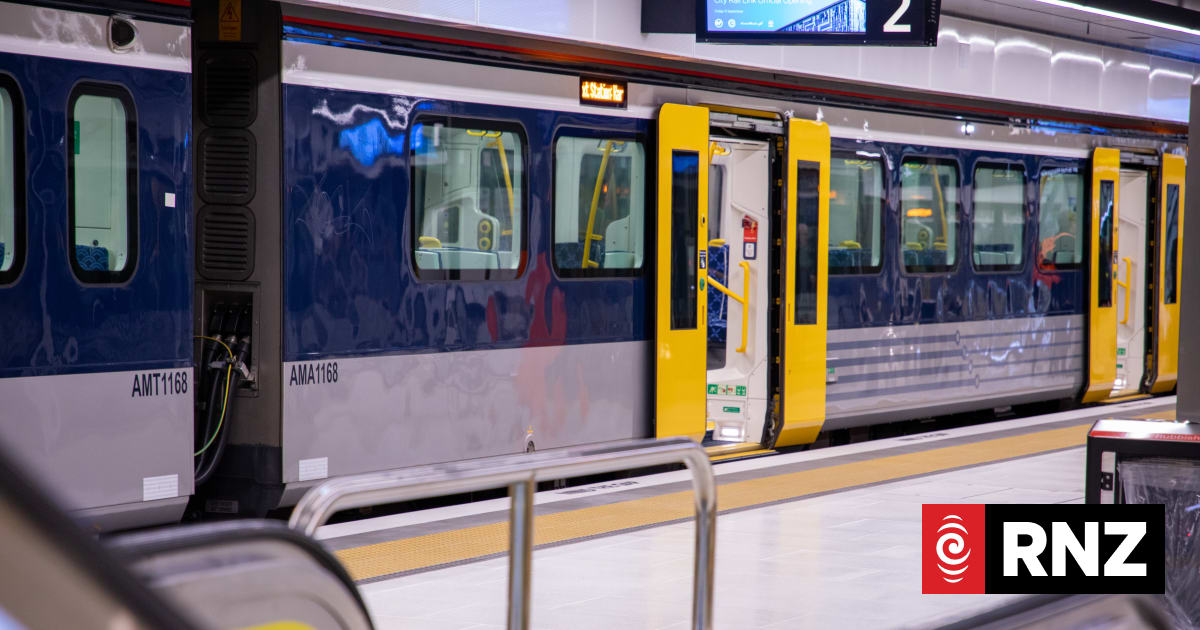
Auckland’s new City Rail Link proves ambition — now fix the teething problems

After years of construction and billions spent, Auckland’s City Rail Link finally opened its tracks to the public — and, predictably, drew train enthusiasts keen to be among the first to ride. That sense of accomplishment must be savoured: big infrastructure takes time, political will and public investment. But the jubilation of a long‑anticipated opening was tempered when a fire on the first day caused delays and cancellations. Those immediate problems are frustrating for commuters and embarrassing for operators, but they also offer a clear opportunity to improve. When a project of this scale reaches operational status, expectations are high and tolerance for early snags is low. Operators and councils should have anticipated that the first day of operation would be scrutinised; that is precisely when the system must perform at its best. A fire on day one raises questions about operational readiness, safety testing and contingency planning. Those questions deserve direct answers. Commuters need to know what went wrong, why, and what steps will prevent a repeat. Transparency builds public trust and helps avoid the erosion of confidence that can follow high‑profile mishaps. At the same time, perspective matters. Complex rail systems are not simple consumer goods that can be rolled out faultlessly on day one. Testing, training, and unforeseeable incidents will always be part of the early phase. The right response balances accountability with patience: fix the problems quickly, communicate clearly to affected passengers, and ensure that lessons learned are fed back into ongoing operations. The public also has a stake beyond the immediate delays. Major transport projects are paid for by taxpayers and rates, and their long‑term value depends on reliability and integration with the rest of the city’s transport network. Aucklanders will be forgiving of first‑day glitches if they see consistent improvements, robust safety practices and a clear plan to make the link a dependable backbone for commuting, freight and urban development. Finally, officials should use this moment to strengthen their relationship with the public. Clear, candid explanations about what happened and how it will be fixed will do more to reassure passengers than bland promises. Celebrate the achievement — the link is a milestone for Tāmaki Makaurau — but treat the teething problems as a management priority. Get the operations right, and the City Rail Link will repay the patience of those who waited years and billions for it to open.

Community angle

Commuters and taxpayers will feel the impact of delays and safety lapses. They need clear answers about reliability and plans to prevent future disruptions as the new rail link moves from novelty to daily service.

Source: https://www.rnz.co.nz/rss/business.xmlOriginal source

Read Next

View latest

13 September 2026

Forty‑one days’ petrol is not immunity — Australia needs energy resilience, not complacency

The energy minister’s candid note that Australia holds 41 days’ worth of petrol in its strategic reserve should be heard as a warning rather than comfort. It is a useful buffer, but not an immune shield. The international picture is worrying: conflict across the Middle East has again placed pressure on global oil supplies. Saudi authorities reported a temporary closure of a crucial export route after drones launched from Iraq, a move that illustrates how fragile the routes and chokepoints that carry the world’s fuel really are. Add to that the ongoing dispute involving Saudi Arabia and the Houthis and the broader instability linked to the war in Iran, and the pressure on prices is clear. For ordinary Australians, these are not distant headlines. Fuel costs feed directly into household budgets through petrol and into the broader economy through freight, food and services. When international supply is disrupted, prices move quickly, and the immediate consequence is felt at service stations and supermarket aisles. That is why stockpiles matter, but stockpiles alone are not a long‑term defence. A strategic reserve gives governments breathing space, allowing temporary market responses or diplomatic de‑escalation to take effect. But 41 days can be eaten away by sustained disruption, by the cumulative effect of multiple shocks, or by logistical problems at home. The recent events in the Gulf underline the point: a single closure of an export route — even a temporary one — can cascade into price spikes. Australia sits at the end of a long, complex global supply chain. That position makes resilience both pricier to build and more essential to buy. The task for policymakers is twofold. First, they must ensure transparency and clear contingency planning so the public understands what the reserve can and cannot achieve. Citizens are entitled to know how and when reserves will be used, and what triggers release. Second, this moment should sharpen the case for a broader energy strategy that reduces exposure to single‑source risks. That does not mean immediate self‑sufficiency in oil — unrealistic on short notice — but it does mean accelerating transitions where feasible, improving fuel efficiency, diversifying supply routes and investing in alternatives that blunt the effect of global oil shocks on everyday life. The government’s public acknowledgment of the reserve size is welcome candour. But it must be accompanied by sober planning and honest communication. Australians will be more reassured by a credible, multi‑layered approach to energy security than by a single headline number. In an unstable world, resilience is built not by counting days of supply, but by preparing for the day after those stocks run low.

Community angle

Rising petrol prices hit household budgets and drive up costs of goods and services. Knowing what reserves can do and how governments plan for disruption matters to commuters, small businesses and shoppers.

Source: Guardian Australia PoliticsOriginal source

13 September 2026

When a senator calls big tech an 'attack on democracy', Parliament must listen

Sarah Hanson‑Young’s recent conversation with The Guardian’s political editor brings into sharp relief a debate that will shape our politics and public life: how to regulate the platforms that now mediate so much of our civic conversation. The Greens senator used stark language — describing big tech as an “attack on democracy” — and explained why the Greens have made Labor’s digital duty of care legislation a priority. The exchange also touched on the party’s decision to back the government’s controversial plans for a new ko… a shorthand reminder that these conversations happen in complex, sometimes compromise‑ridden political terrain. That debate matters to every Australian. The digital duty of care proposed by Labor is not an abstract policy tussle between Canberra and Silicon Valley; it is a test of whether our laws can protect everyday civic life while preserving legitimate public expression. Senators and MPs are rightly asking how to reduce harms that flow through online services, and how to make sure those services are accountable. Hanson‑Young’s intervention helps frame the stakes: lawmakers are not merely tinkering with technical rules, they are responding to a sense that the way digital platforms operate has consequences for how we debate, vote and live together. The Greens’ support for parts of the government’s plan also underlines another practical truth of Australian politics — meaningful reform rarely arrives in pure form. Parties trade, negotiate and sometimes accept provisions they regard as imperfect to secure guardrails they believe are essential. That sense of pragmatic politics is worth recognising; it does not weaken the need for rigorous oversight. It should, instead, sharpen it. If the digital duty of care becomes law, the hard work will be in the details: who enforces it, how harms are defined, what transparency is required of platforms, and how to protect legitimate speech while preventing organised manipulation. There is a second lesson here for the public. Politicians across the spectrum will use different language — some invoking safety, others fretting about free speech — but citizens must be alert to how those choices are translated into rules that affect everyday life. This is not only a job for lawyers and tech executives. Schools, community groups, media organisations and ordinary users have a stake in the norms that are set. The Greens senator using a national platform to make her case helps broaden public debate; Australians should take it as an invitation to engage rather than as a signal that the matter is too arcane for ordinary scrutiny. Finally, the episode is a reminder that the policy response should not be rushed or sentimental. Regulation of powerful technologies should be principled, evidence‑based and adaptable. It should also be transparent — the public deserves to know what trade‑offs are being made and why. If we treat this moment as merely another political skirmish, we risk passing laws that either fail to protect citizens or unduly stifle legitimate online life. If, instead, lawmakers from all sides seize the chance to craft clear, enforceable duties — informed by civic values and practical enforcement mechanisms — Australia can set a model for other democracies wrestling with the same problem. The conversation begun by Hanson‑Young and captured in that podcast is a good place to start.

Community angle

Ordinary Australians use digital platforms every day. The duty of care debate will affect safety, civic debate and what content people see — making it a public policy issue, not just a parliamentary one.

Source: https://www.bing.com/news/search?q=Australia+politics&format=rssOriginal source

12 September 2026

Middle East flare-up lays bare Australia's thin petrol buffer

Australia's 41‑day petrol reserve offers some comfort, but the latest strikes on oil export routes and rising global prices show the nation is exposed. Government, industry and households must face the reality that supply shocks will recur and act to reduce vulnerability.

Community angle

Every household and business feels higher prices at the bowser. Knowing Australia has limited strategic petrol stocks should prompt debate about practical steps — from reducing fuel dependence and improving transparency about reserves to strengthening contingency plans for transport, farming and emergency services.

Source: Guardian Australia PoliticsOriginal source

12 September 2026

When a pipeline is hit, the ripples reach Down Under

A drone attack has forced Saudi Arabia to close its East‑West pipeline — a route described as a vital workaround to Iran’s Persian Gulf blockade. The closure is not a distant regional incident; it is an event with clear global implications, and Australians have a stake in how the fallout is managed. The East‑West pipeline has long provided Saudi Arabia with flexibility in moving oil away from vulnerable Persian Gulf chokepoints. Its temporary shutdown, prompted by an attack traced back to Iraq according to reporting, removes a key shipping insurance valve at a moment of heightened regional tension. Saudi statements that it will not retaliate immediately and is pressing Iraq to take measures underline the diplomatic complexity of the situation. This episode also sits in a wider pattern: analysis indicates that Iran and its allies now exert influence over two major oil shipping routes. That strategic leverage has been used to extract diplomatic and material concessions in other contexts; it also ups the stakes for countries that depend on stable energy flows. For markets, policymakers and household budgets, disruptions to established routes create uncertainty. Australians should not be complacent. We are far from the Persian Gulf, but our economy is integrated into global commodity markets. Any serious disruption to oil flows can ripple through shipping costs, insurance premiums and energy markets, with downstream effects on businesses and household living costs. The pathway is indirect but real: when the world’s major producers are forced to alter logistics or reroute supplies, costs and supply risk are redistributed globally. The proper response at home is pragmatic. Governments and businesses should be monitoring developments closely and testing contingency plans. That includes ensuring fuel reserves and distribution chains are resilient, keeping a wary eye on maritime insurance and freight costs, and recognising that geopolitical shocks can accelerate conversations about energy diversification and domestic resilience. But the lesson is not merely technical. The attack underlines how fragile the infrastructure underpinning global trade and energy security can be when political tensions flare. It also demonstrates the limits of military responses as the sole instrument of statecraft; Riyadh’s decision to avoid immediate retaliation and to press Iraqi authorities instead points to the primacy of diplomacy even amid security challenges. For Australian policymakers, the moment calls for steady, strategic thinking rather than panic. Strengthening intelligence and diplomatic ties, contributing to multilateral efforts to secure shipping lanes, and accelerating domestic measures that reduce exposure to sudden supply shocks are sensible options. For voters and consumers the takeaway is simple: distant conflicts can produce local consequences. That is why engagement, clear planning and prudence in national energy policy matter — now more than ever.

Community angle

Explains how the Saudi pipeline closure and wider regional leverage affect Australians through energy supply chains and global markets, and why government contingency planning matters to households and businesses.

Source: New York Times WorldOriginal source