Advertise with us
DOWNUNDERVOICESAustralia · New Zealand · World
Back to World
World

13 August 2026

School hours shortened in parts of PNG as El Niño bites

Downunder Voices Newsroom

Source reporting: rnz.co.nz

School hours shortened in parts of PNG as El Niño bites

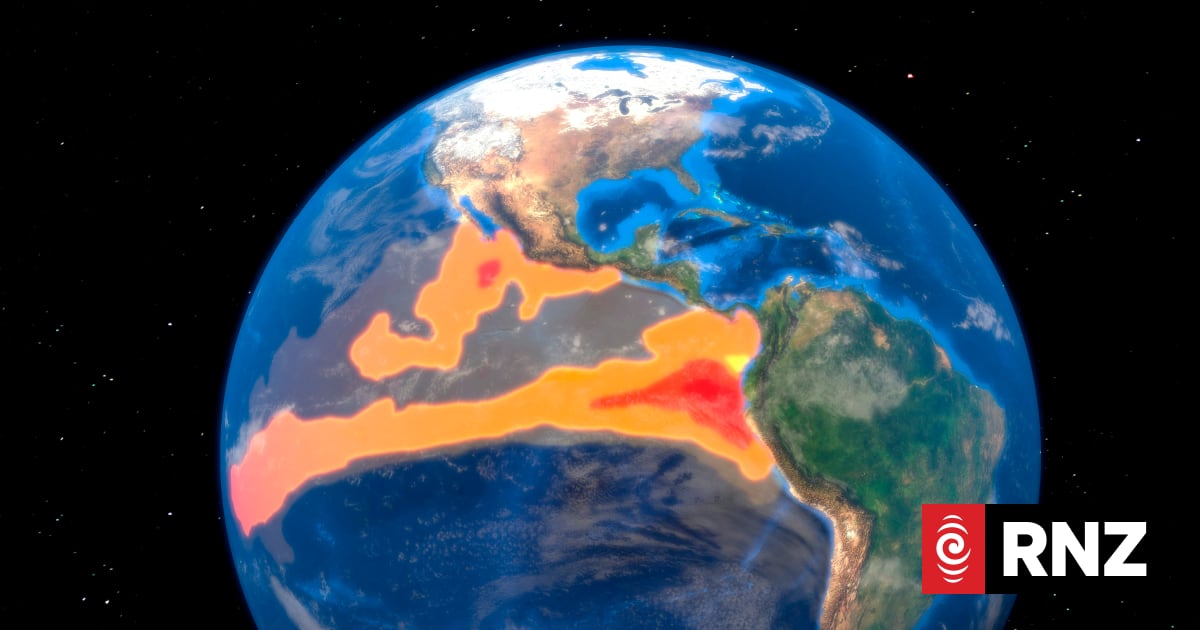
Schools in several areas of Papua New Guinea have been shortening class times due to El Niño.

About this report

Downunder Voices provides an independently written summary and community perspective based on information published by the original source. The original publisher remains responsible for its reporting.

Join our community

Follow Downunder Voices

Join thousands of readers following news and community stories from Australia, New Zealand and the Pacific.

More from World

View category

13 August 2026

K9 stop on Louisiana’s I-12 uncovers 358 kilos of meth in semi-trailer, driver now in ICE custody

Livingston Parish deputies stopped an 18-wheeler on Interstate 12 eastbound in Denham Springs, Louisiana. Their investigation uncovered nearly 800 pounds of methamphetamine inside the trailer. Authorities identified the driver as Anton Vitalyevich Rakov, a Russian national. Deputies took Rakov into custody because of his immigration status. The Livingston Parish Sheriff’s Office reported that its K9 Division conducted the traffic stop.

Source: FreightWavesOriginal source

Read Next

View latest

13 August 2026

Victoria’s forensic mental health system is fraying — staff burnout risks patients and justice

A leaked report from insiders paints a worrying picture of Thomas Embling Hospital, Victoria’s only mental healthcare provider for the criminal justice system. The document describes a service struggling with inefficient use of government funding and a predominantly junior workforce that is burning out. Those facts point to systemic weaknesses that imperil both patient care and public safety. When a specialist public service is understaffed, under‑resourced or reliant on inexperienced staff who are exhausted, the consequences are immediate. Patients with complex needs miss out on timely assessment and treatment. Clinical decisions are made under pressure. Staff are more likely to leave, compounding the recruitment and retention problem in a feedback loop that worsens care standards. Because Thomas Embling operates at the intersection of health and criminal justice, failures here have broader social implications. The hospital’s role is to treat people whose mental illness intersects with offending or risk; when services fail, individuals may face inappropriate detention, premature discharge, or preventable deterioration. Families and victims also bear the consequences when a specialist system cannot reliably deliver safe, therapeutic care. The leaked findings raise several policy questions that deserve public scrutiny. Is the current funding model adequate for the hospital’s mandate? Are governance arrangements delivering clear clinical oversight and accountability? Does workforce planning anticipate the specialised skills and support junior clinicians need to manage challenging caseloads? These are operational but crucial questions for ministers and health administrators. A measured response should focus on stabilising the workforce and improving system efficiency. That means targeted investment in training, supervision and staff wellbeing to reduce burnout. It also means reviewing how government funding is allocated and spent, so resources reach frontline clinicians and essential therapeutic programs rather than being absorbed by avoidable overheads. Independent oversight could help restore public confidence and ensure that corrective action is evidence‑based rather than reactive. Public safety and dignity for patients are not competing priorities; they depend on the same thing: a credible, well‑resourced forensic mental health service. If Victoria is to meet its obligations to people inside the justice system and the community, it must treat the leaked report as a call to act rather than an embarrassment to be papered over. The hospital’s staff need realistic workloads, meaningful supervision and proper funding; patients need consistent, competent care. That should be the benchmark for measuring success.

Community angle

Victoria’s sole mental healthcare provider for people in the criminal justice system is reportedly struggling with funding inefficiencies and a junior, burned‑out workforce, affecting patients, families and community safety.

Source: https://www.abc.net.au/news/feed/45910/rss.xmlOriginal source

13 August 2026

When drought becomes displacement: Somalia’s hunger emergency needs urgent action

Somalia is living through more than a bad dry season. Thousands of families are being driven from their homes after a yearslong drought wiped out livestock and farms, and that displacement is unfolding as aid flows shrink. The result is a humanitarian emergency in which ordinary people – smallholder farmers, pastoralists, market vendors and their children – are left without the means to eat, shelter or rebuild. The facts are stark. Reported coverage makes clear that tens of thousands are hunger‑stricken, livestock and crops have been lost, and aid has fallen sharply. Those are the conditions that push populations from food insecurity towards famine and long‑term displacement. When support dwindles at the very moment people need it most, vulnerability multiplies: families sell the last of their assets, children are pulled from school, and community coping mechanisms collapse. This matters because drought‑driven hunger is not an abstract statistic. It destroys livelihoods built over generations and forces people into perilous choices. It also creates regional spillovers: as households migrate in search of food and water, pressure on towns and host communities grows, and public services fray. That in turn heightens the risk of social breakdown and undermines any hope of a stable recovery. Accountability and policy questions follow. Who is monitoring the scale and speed of needs on the ground? Which donors have reduced assistance, and why? Are remaining humanitarian actors able to prioritise the most urgent life‑saving support – water, emergency food, medical care – while protecting the dignity and safety of displaced families? Reliable, scalable assistance is the obvious short‑term priority. But recovery requires parallel investment in livelihoods: replacing livestock where feasible, rehabilitating irrigation and seed systems, and supporting markets so families can earn an income again. Governments and international agencies must also guard against fragmentation. Aid that arrives in fits and starts cannot substitute for predictable, multi‑year support that allows communities to rebuild. And humanitarian responses ought to be informed by the people directly affected: local leaders, farmers’ cooperatives and community organisations know the land and the coping strategies that have survived previous crises. For the global public, the question is not whether to care but how to respond quickly and effectively. A meaningful response will combine emergency relief with early recovery measures that keep people on their land or help them re‑establish livelihoods elsewhere. Donors and agencies should publish transparent plans that explain how reduced assistance will be addressed, and governments in the region must be pressed to ensure safe access for humanitarian workers. Somalia’s drought is already costing lives and livelihoods. Without a rapid, coordinated re‑scaling of aid linked to durable recovery programs, the human cost will only grow. Ordinary people caught in the middle deserve more than headlines; they need sustained, well‑targeted help to survive and rebuild.

Community angle

Thousands of Somalis have lost livestock and farms to a yearslong drought while aid has declined sharply, leaving ordinary families hungry and displaced.

Source: Al Jazeera EnglishOriginal source